Summer is the quiet season for most commercial facilities. Schools clear out, office occupancy dips, and many industrial plants run lighter shifts during shutdown weeks. For facility managers, that drop in foot traffic is an opportunity. The same floors that take a beating from October through May can finally be stripped, refinished, and brought back to a high standard before the next year of wear begins.
A summer floor care program is one of the highest-leverage moves a facility maintenance team can make. Done well, it sets up your floors to look better, last longer, and require less daily effort all the way through the next winter.
This guide walks through what a complete strip-and-refinish program looks like, when to schedule it, and the most common mistakes that turn a good plan into a redo.
Why summer is the right time
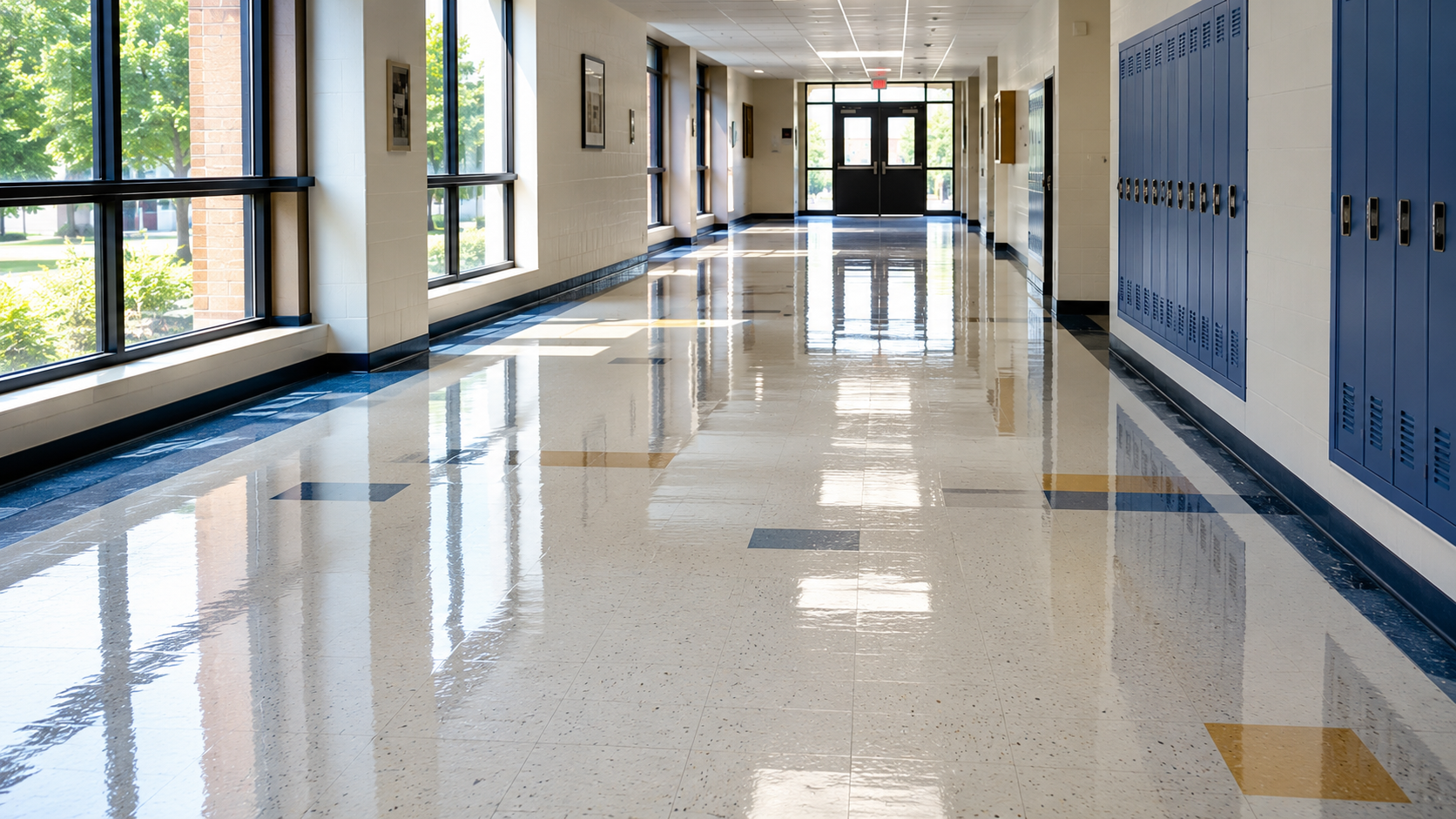
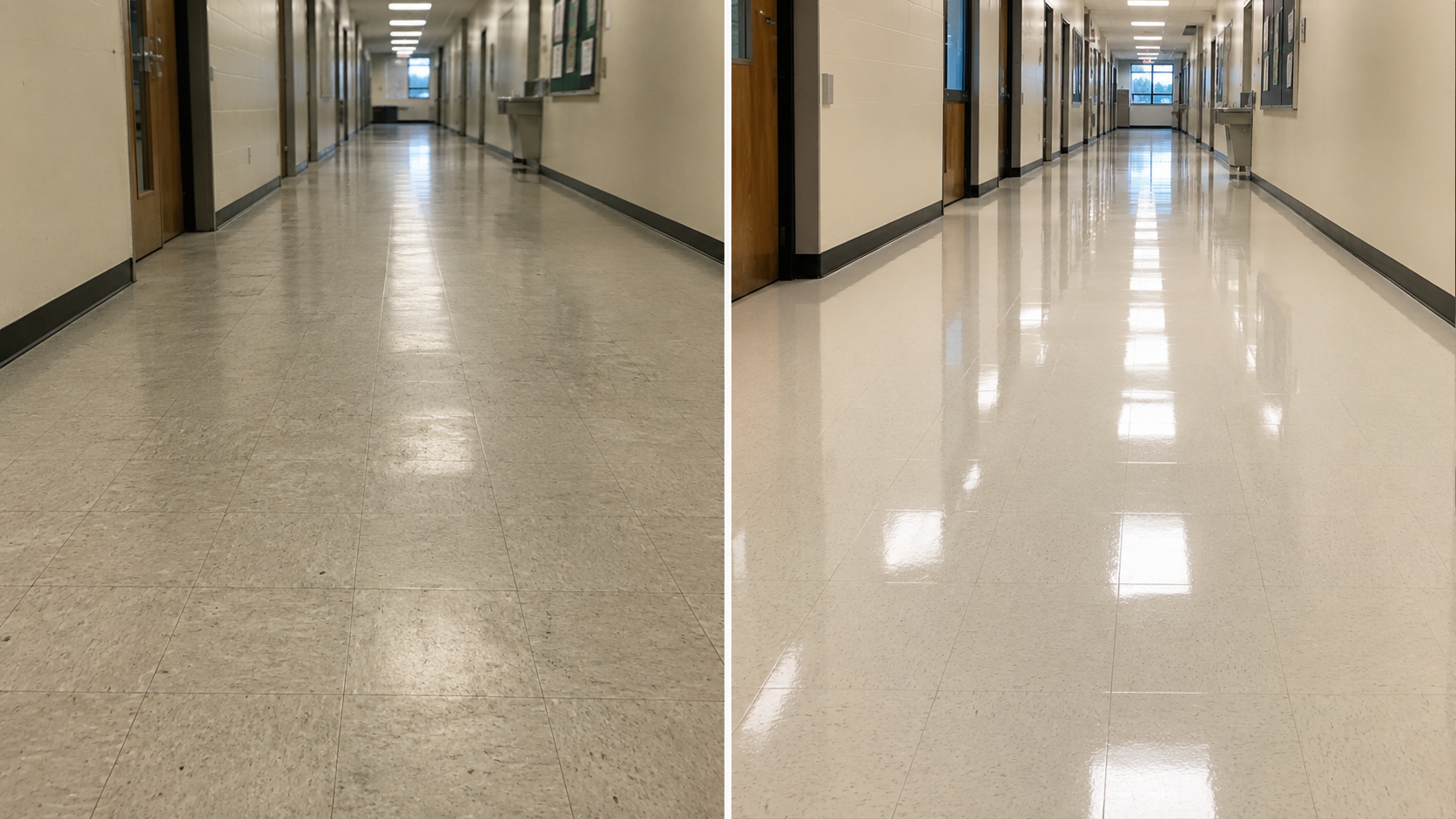
Floor finish does its job by absorbing wear that would otherwise damage the underlying flooring. Over the course of a year, that finish accumulates scuffs, embedded soil, and microscopic damage from foot traffic, carts, ice melt residue, and aggressive cleaning. By late spring, even a well-maintained floor often looks dull, uneven, and tired.
Stripping and refinishing during periods of low occupancy gives crews the time they need to do the work properly. A complete strip, multiple coats of finish, and full cure time cannot happen overnight in a busy building. Summer windows, school breaks, and shutdown periods are when the math works.
There is also a budget angle. Floors that go too long between strip-and-refinish cycles eventually require full restoration, which is significantly more expensive than maintaining a regular program. A summer reset every one to two years is the cost-effective approach.
The phases of a complete strip and refinish
Phase 1: Inspection and planning
Before any product touches the floor, walk the space and assess what you actually have. Different floor types call for different chemistry. Vinyl composition tile is the most common in commercial settings, but you may also consider sheet vinyl, terrazzo, or sealed concrete. The wrong stripper on the wrong surface causes damage that is difficult and expensive to reverse.
Plan around your facility’s calendar. Identify the specific days your space can be closed off, account for cure time before the area is available for use, and confirm that your team has the equipment available for the dates you are targeting.
Phase 2: Stripping
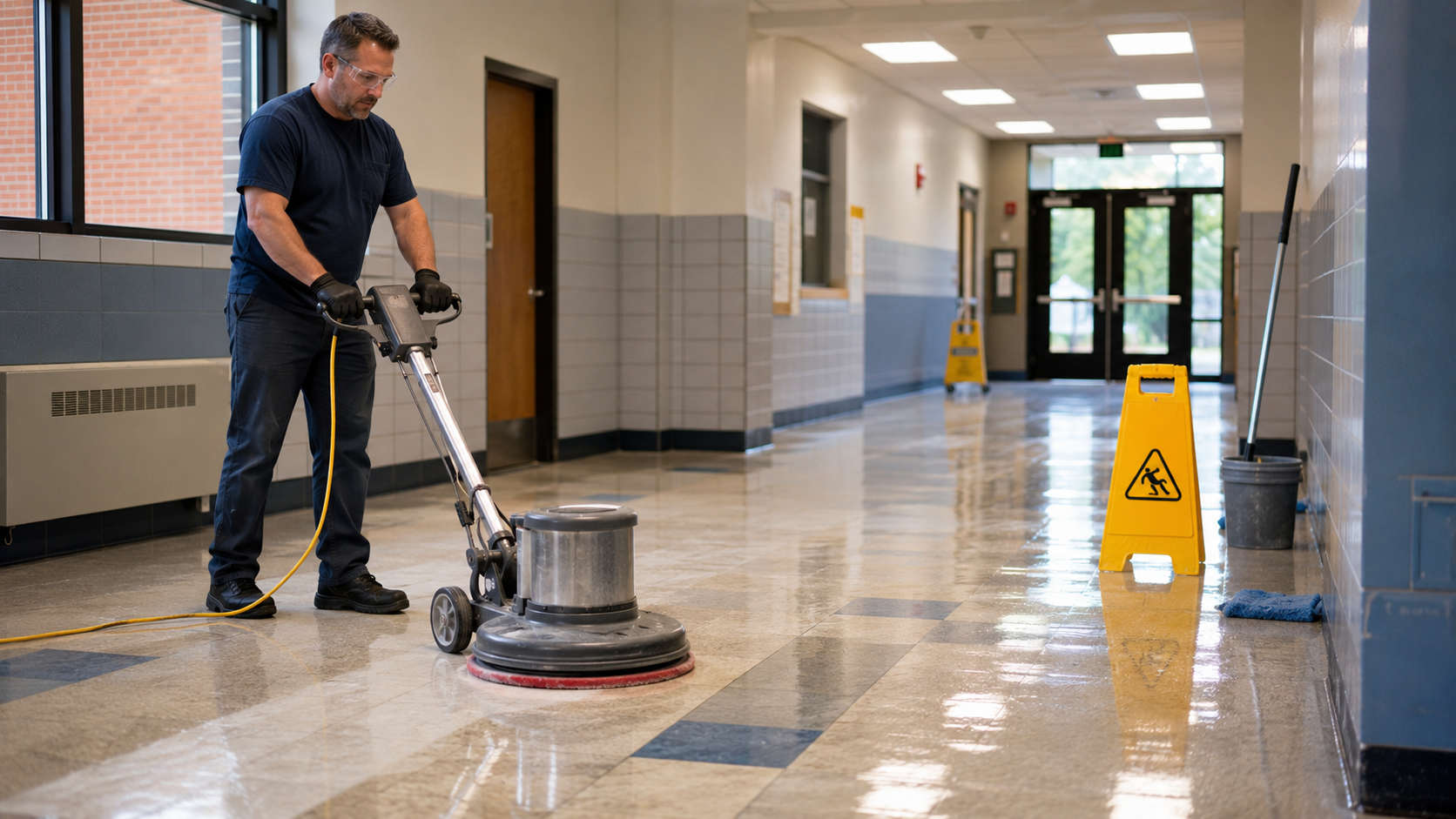
Stripping removes the existing layers of finish and the soil embedded in them. This is the most demanding phase of the program and the point at which most errors compound.
A purpose-built stripper applied at the correct dilution, with adequate dwell time, is non-negotiable. Spartan Step Down Low Odor Stripper is a strong example. It is formulated to break down old finishes quickly while keeping odor levels low enough to work in occupied buildings during off-hours, and it rinses cleanly, leaving the floor ready for finish without residue. You can review the product details at https://bannersystemsma.com/product/spartan-step-down-low-odor-stripper/.
Apply the stripper, allow the labeled dwell time, agitate with the appropriate floor pad, and completely pick up the slurry. Rinse the floor twice with clean water and a neutralizer if the stripper instructions call for one. The floor needs to be fully neutral and fully dry before any finish goes down.
Phase 3: Refinishing
Apply finish in thin, even coats. Most commercial floors require four to six coats of finish to achieve a properly built-up surface, with adequate drying time between coats. Cutting corners on coat count or drying time is the most common reason a floor that was stripped in June is dull again by October.
The finish you choose matters. A high-solids floor finish builds up faster, holds gloss longer, and tolerates more burnishing cycles before needing recoat. Spartan iShine, available at https://bannersystemsma.com/product/spartan-ishine-floor-finish/, is a high-performance finish suited to commercial traffic loads in healthcare, education, and office environments.
Phase 4: Maintenance plan
A strip-and-refinish job is only as good as the maintenance program that follows. Daily dust mopping, prompt spill cleanup, walk-off mats at every entrance, and a regular burnishing schedule are what keep that fresh finish looking its best for as long as possible.
Document the program. Note the strip and refinish dates, the products used, and the planned burnishing intervals. The next person who manages this floor will need that information.
Common mistakes that ruin a floor care program
Skipping the rinse. Stripper residue left on the floor prevents the finish from bonding properly. The result is a finish that fails early, often manifesting as peeling, hazing, or uneven gloss. Always rinse fully, and verify the floor is neutral before applying the finish.
Applying a finish over a wet floor. Even a slightly damp floor will trap moisture under the finish, leading to clouding and adhesion failures within weeks. Allow the floor to fully dry before the first coat.
Too few coats. Two or three coats may look acceptable when wet, but they do not provide the depth and durability needed for a year of commercial traffic. Plan for four to six coats.
Not allowing cure time. The floor finish needs time to fully harden before the area can return to normal use. Walking on a finish that has not cured leaves marks and burnishing damage that appear immediately. Respect the cure window in the product instructions.
Mismatched chemistry. Mixing strippers, finishes, and neutralizers from different chemistry families can cause incompatibility issues that compromise the whole job. Stay within a coordinated product system whenever possible.
Frequently asked questions
How often should commercial floors be stripped and refinished? Most commercial vinyl composition tile floors should be stripped and refinished every one to two years, with regular burnishing in between. High-traffic areas like school corridors, healthcare facilities, and retail spaces often fall at the annual end of that range. Lower-traffic office areas can sometimes go two years between full strip cycles if the maintenance program is consistent.
What is the difference between stripping and recoating? Stripping removes all existing finish layers down to the bare flooring, then rebuilds the finish from scratch. Recoating, sometimes called scrub and recoat, removes only the top layers of finish and adds fresh coats. Recoating is faster and less expensive, but it eventually reaches a point where stripping is the only way to properly reset the floor.
Can I strip a floor while the building is occupied? Low-odor strippers allow floor work in occupied buildings during off-hours, but the area being worked on must remain fully closed off until the finish has cured. Schedule around the times when foot traffic is lowest.
How long does a strip-and-refinish project take? For a typical commercial space, plan for one full day of stripping followed by one to two days of refinishing with multiple coats. The floor should not return to full use for at least 24 hours after the final coat, longer for heavy traffic.
What floor finish lasts the longest? High-solids finishes generally outperform lower-solids products in both gloss retention and durability. A finish in the 25 to 30 percent solids range, applied in adequate coats and maintained with regular burnishing, can hold up well for a full year in most commercial environments.
Plan your summer floor program with Banner Systems
Floor care is one of those areas where the difference between a great program and a frustrating one comes down to the details. The right products, the right sequence, and the right schedule all matter.
Banner Systems has been helping facility managers across Massachusetts, Rhode Island, and New Hampshire plan and execute floor care programs since 1962. Our team can walk you through product selection, dilution ratios, application timelines, and the maintenance routine that protects your investment after the work is done.
Contact our team to plan your summer floor-care program, or visit bannersystemsma.com to explore our full catalog of floor-care chemicals, equipment, and accessories.