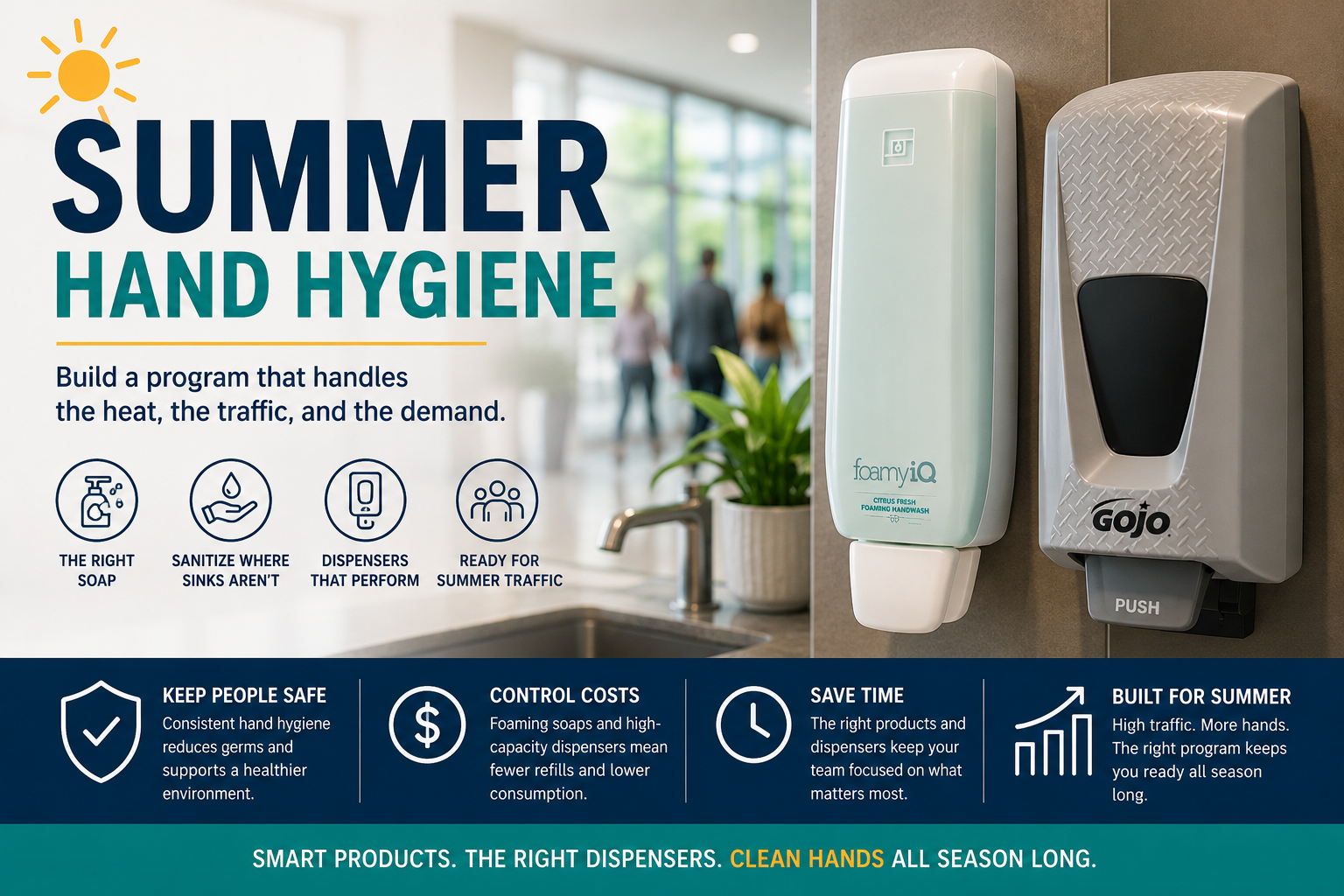
Summer puts a different kind of pressure on a building. Schools host camps and conferences. Hospitals see longer visiting hours. Office buildings welcome interns, visitors, and event attendees. Industrial plants keep running through shutdown weeks with rotating crews. The volume of people moving through your facility is often higher than in any other season, and the hand hygiene program has to keep up.
A program that runs smoothly in February can fall apart in July if it was not built for the volume. Empty dispensers, sticky countertops, restroom complaints, and rising consumable costs are all signs that a hand hygiene program needs an upgrade.
This guide walks through how to evaluate your current setup, what to look for in soap and sanitizer products, and how dispenser selection affects everything downstream.
Why do hand hygiene programs break down under summer traffic
The math is simple. Hand soap and hand sanitizer are consumables, and their consumption rate scales with the number of hands using them. Most facilities specify their hand hygiene program around average daily traffic. When summer pushes traffic 30 to 50 percent higher than average, the dispensers run dry faster than the cleaning team can refill them.
When a dispenser runs dry, two things happen. The first is obvious: people skip washing or sanitizing because the product isn’t available. The second is less obvious but more expensive: cleaning teams spend a disproportionate amount of time refilling dispensers rather than completing the rest of their work.
A well-designed program addresses both problems through capacity, product selection, and dispenser placement.
What to look for in commercial hand soap
The soap in your dispensers does more than just clean hands. It shapes the experience people have in your restroom and breakroom, affects the skin health of the people using it day after day, and determines how often your team has to refill.
Foaming handwashes outperform liquid in most settings
Foaming hand soap uses significantly less product per use than liquid soap, extending refill intervals and reducing consumption costs over time. The foam dispenses a controlled, single-dose portion that lathers immediately, reducing waste and improving hygiene compliance.
Spartan foamyiQ Citrus Fresh Foaming Handwash is one of the products we routinely recommend for high-traffic commercial restrooms. The foaming format extends product life, the citrus fragrance is fresh without being aggressive, and the formulation is gentle enough for repeated use across a long shift. You can review the product details at https://bannersystemsma.com/product/spartan-foamyiq-citrus-fresh-foaming-handwash/.
Skin health matters more than facility teams realize
For staff who wash their hands 20 or 30 times a shift, soap chemistry has a real impact on skin condition. Look for formulations that include moisturizers, avoid harsh sulfates, and have a pH range that respects the skin’s natural barrier. A soap that causes dryness, redness, or cracking will quickly become one staff avoid using, which defeats the purpose of having a program at all.
Fragrance is part of the program
Fragrance is one of the most important and underestimated factors in restroom perception. A pleasant, persistent fragrance signals cleanliness even when no one is actively cleaning. Aggressive or chemical-smelling fragrance signals the opposite. Pick a fragrance profile that matches the environment and stay with it for consistency across your portfolio.
When and where to add hand sanitizer
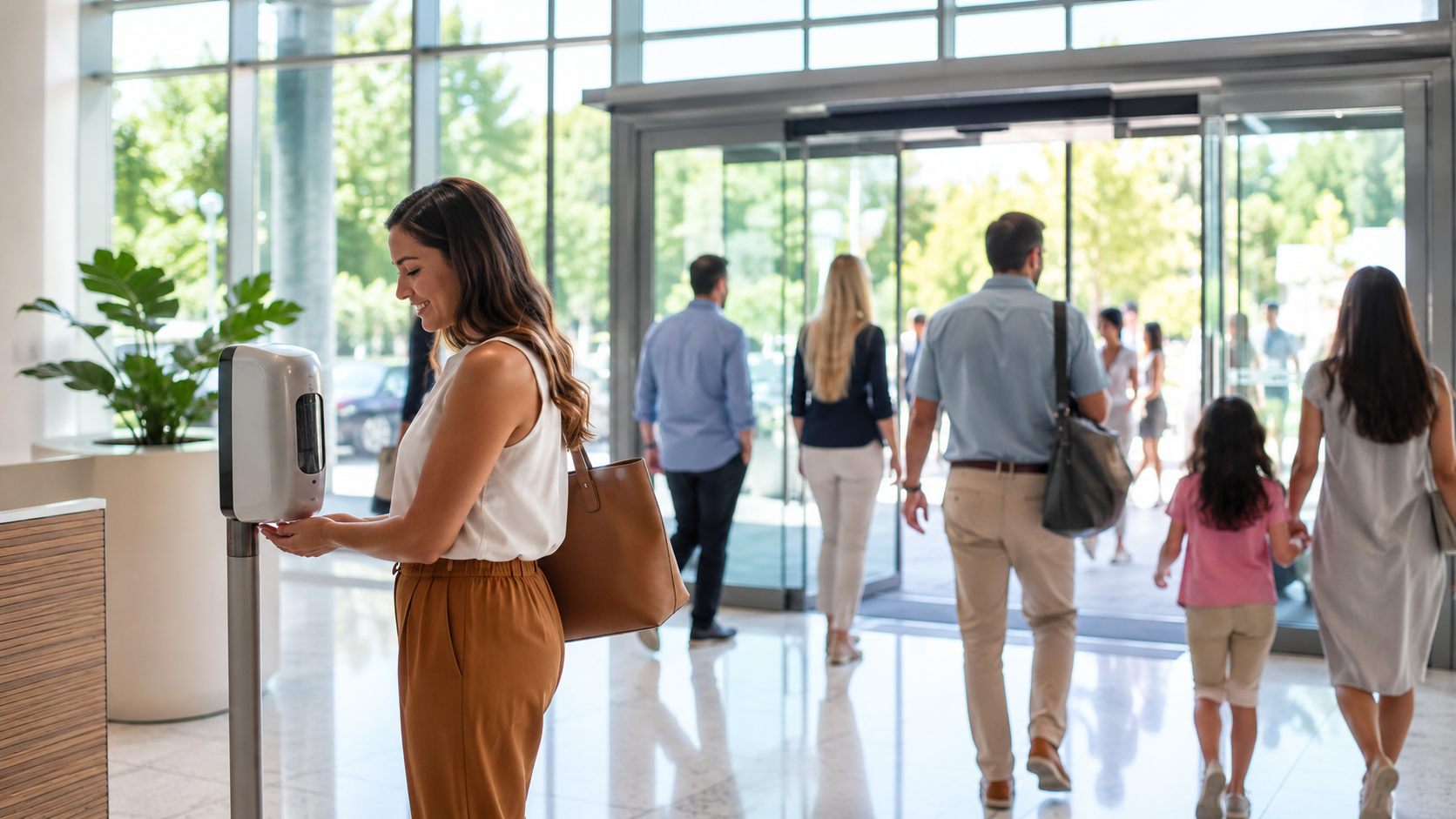
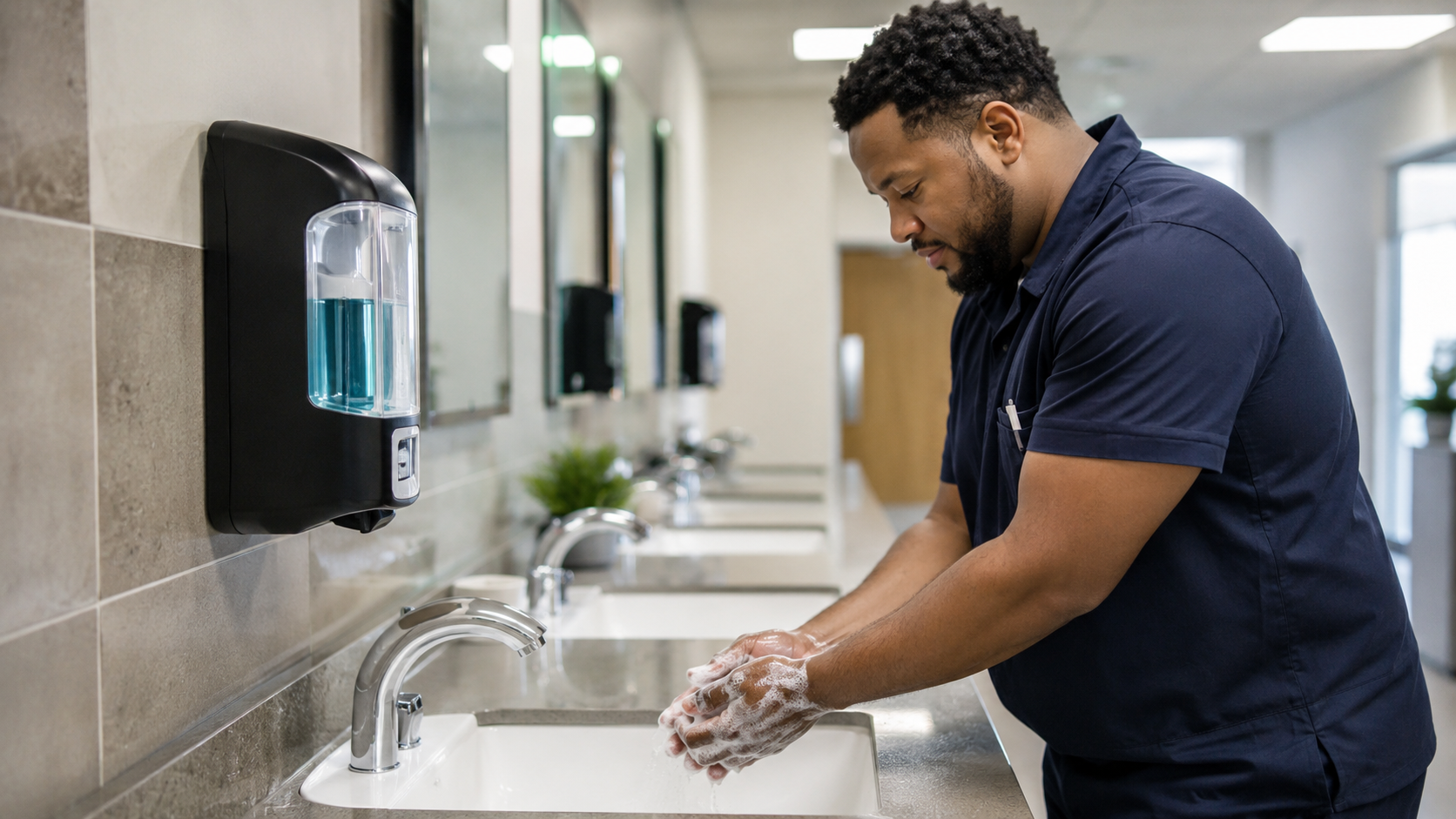
Hand soap belongs at sinks. Hand sanitizer belongs everywhere a sink is not practical: building entrances, elevator banks, cafeteria queues, conference room hallways, and the entrances to clinical or food service areas.
Look for alcohol-based sanitizers in the 70 percent ethanol range, which is the concentration most strongly supported for general use. Foaming or gel formats with skin conditioners reduce the dryness associated with frequent use. Touch-free dispensers reduce the risk of cross-contamination and feel cleaner to occupants.
A common mistake is treating sanitizer as a backup for soap. The two products serve different purposes. Soap removes soil and pathogens through mechanical action. Sanitizer reduces pathogens on already-clean hands. Both belong in your program, deployed in the right locations.
Dispenser selection is the part that most facilities get wrong
The dispenser is the part of the system that fails most visibly. A dispenser that leaks, jams, or runs out mid-shift undoes the value of even the best soap. Picking the right dispenser for each location is one of the highest-leverage decisions in the program.
Capacity should match traffic
For high-traffic restrooms, locker rooms, and entry points, look for high-capacity dispensers in the 1,200-5,000 mL range. The GOJO PRO TDX 5000 dispenser, available at https://bannersystemsma.com/product/gojo-pro-tdx-5000-dispenser/, holds 5,000 mL per refill and is built for facilities where standard dispensers run dry too quickly. For lower-traffic locations, smaller dispensers reduce upfront cost without creating refill problems.
Touch-free is now the expected standard
Manual dispensers still have a place in some applications, but touch-free has become the default for most public restrooms and front-of-house locations. The hygiene benefit is real, and the perception benefit matters as much as the function.
Adjustable output reduces waste
Dispensers that allow you to adjust the dose per activation give your facility manager control over consumption. A dispenser locked at the highest output setting will go through twice as much product as one calibrated to a reasonable dose, with no improvement in hand hygiene outcomes.
Common mistakes that drag down a hand hygiene program
Buying soap and dispensers from different chemistry families. A dispenser is engineered around the viscosity and dispense profile of a specific product family. Mixing brands often leads to dripping, jamming, and an inconsistent dose. Stay within a coordinated system.
Refilling dispensers from bulk jugs. Aside from being unsanitary, this practice voids most dispenser warranties and frequently leads to clogs and cross-contamination. Use sealed refill cartridges designed for the dispenser.
Underspeccing capacity. A 500 mL dispenser in a high-volume restroom is a refill problem waiting to happen. Match capacity to traffic, not to budget.
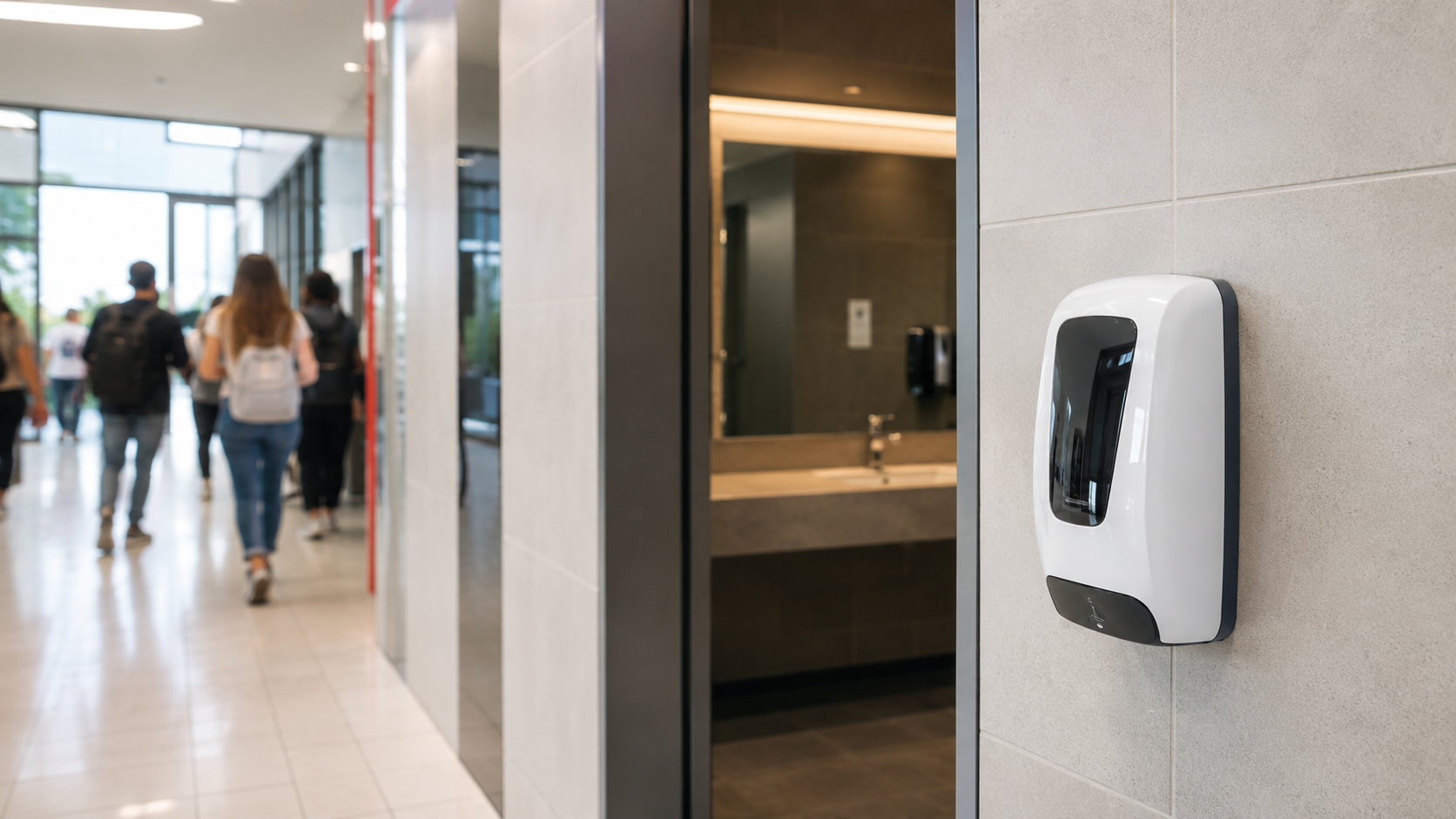
Treating dispenser placement as decorative. Dispenser placement should follow the natural flow of how people use the space. At sinks, near exits, at building entry, and in cafeteria lines. If people have to look for a dispenser, they will skip it.
Ignoring skin health feedback from staff. When staff complain that soap is drying out their hands, listen. A program that makes its users miserable is not successful.
Frequently asked questions
How much hand soap does a commercial facility need per month? Consumption varies dramatically by facility type, traffic volume, and dispenser format. A foaming handwash dispenser delivers roughly 1,000 to 2,500 doses per liter, depending on the dispenser settings. Track your actual usage for a month to establish a baseline, then build inventory targets from there.
Is foaming hand soap better than liquid? For most commercial applications, yes. Foaming soap uses less product per dose, lathers faster, and reduces waste. Liquid soap still has its place in high-soil environments where mechanical cleaning power matters more than dose efficiency.
Where should hand sanitizer dispensers be placed? At all building entrances, in elevator banks, near conference rooms and cafeterias, at the entry to clinical areas, and at any other location where hand contamination is likely and a sink is not immediately available. Sanitizer is a complement to soap, not a substitute.
What is the right alcohol percentage for hand sanitizer? The CDC recommends alcohol-based hand sanitizers with at least 60 percent alcohol, with 70 percent ethanol being the most common formulation in commercial products. Look for sanitizers that include skin conditioners to reduce dryness with frequent use.
How often should soap and sanitizer dispensers be cleaned? Wipe down the exterior of all dispensers daily as part of the standard restroom cleaning routine. Disassemble and clean the internal dispense components according to the manufacturer’s recommendations, typically every refill cycle for cartridge dispensers.
Build a hand hygiene program that holds up year-round
A well-designed hand hygiene program is one of the highest-impact, lowest-cost investments a facility can make. The right products, paired with the right dispensers, in the right locations, deliver better outcomes for occupants and lower total cost for the facility.
Banner Systems has been helping facilities across Massachusetts, Rhode Island, and New Hampshire to spec hand hygiene programs since 1962. Our team has long-standing partnerships with GOJO and Purell, dating back more than 50 years, and with Spartan Chemical for over 35 years, which means we know these products in detail, which matters when you are picking the right system for your facility.
Contact our team to find the right hand hygiene solution for your facility, or visit bannersystemsma.com to explore our full catalog of soap, sanitizer, and dispenser systems.