Cold and flu season disinfection for commercial facilities: how to get ahead of it
Every fall, the same thing happens. Temperatures drop, people spend more time indoors, and within a few weeks, sick days start climbing. For facility managers, cold and flu season is not a surprise. It is a predictable annual challenge, and facilities that prepare for it in advance handle it better than those that react after the first wave hits.
This guide covers what changes when cold and flu season arrives, which surfaces and spaces deserve the most attention, and how to build a disinfection program that protects building occupants without burning out your cleaning staff.
Why commercial facilities are high-risk environments during cold and flu season
Cold and flu viruses spread primarily through contact with contaminated surfaces and through airborne droplets in enclosed spaces. Commercial facilities concentrate both. Dozens or hundreds of people touch the same door handles, elevator buttons, restroom fixtures, and shared equipment every single day.
The good news is that most common cold and flu viruses are relatively easy to kill with an EPA-registered disinfectant applied correctly. The challenge is consistency. A surface disinfected in the morning may be recontaminated by midday in a high-traffic building, and a disinfectant applied too quickly without the proper dwell time does not perform as intended.
Effective cold and flu season disinfection is as much about process as it is about product selection.
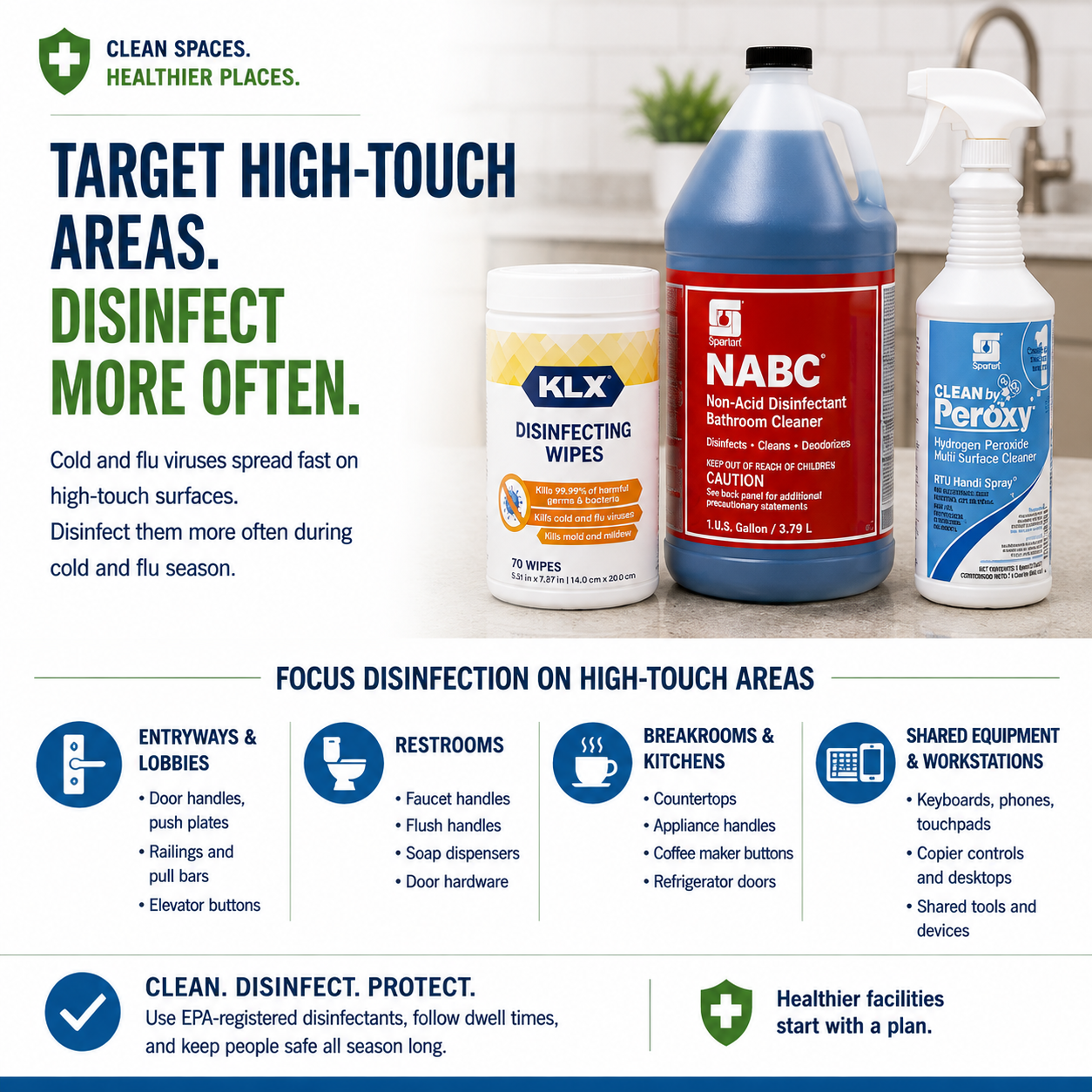
High-touch surfaces that require more frequent attention
Not all surfaces carry the same risk during cold and flu season. The surfaces that accumulate the most pathogen load are those that many different people touch throughout the day, often without thinking about it.
Entryways and lobbies
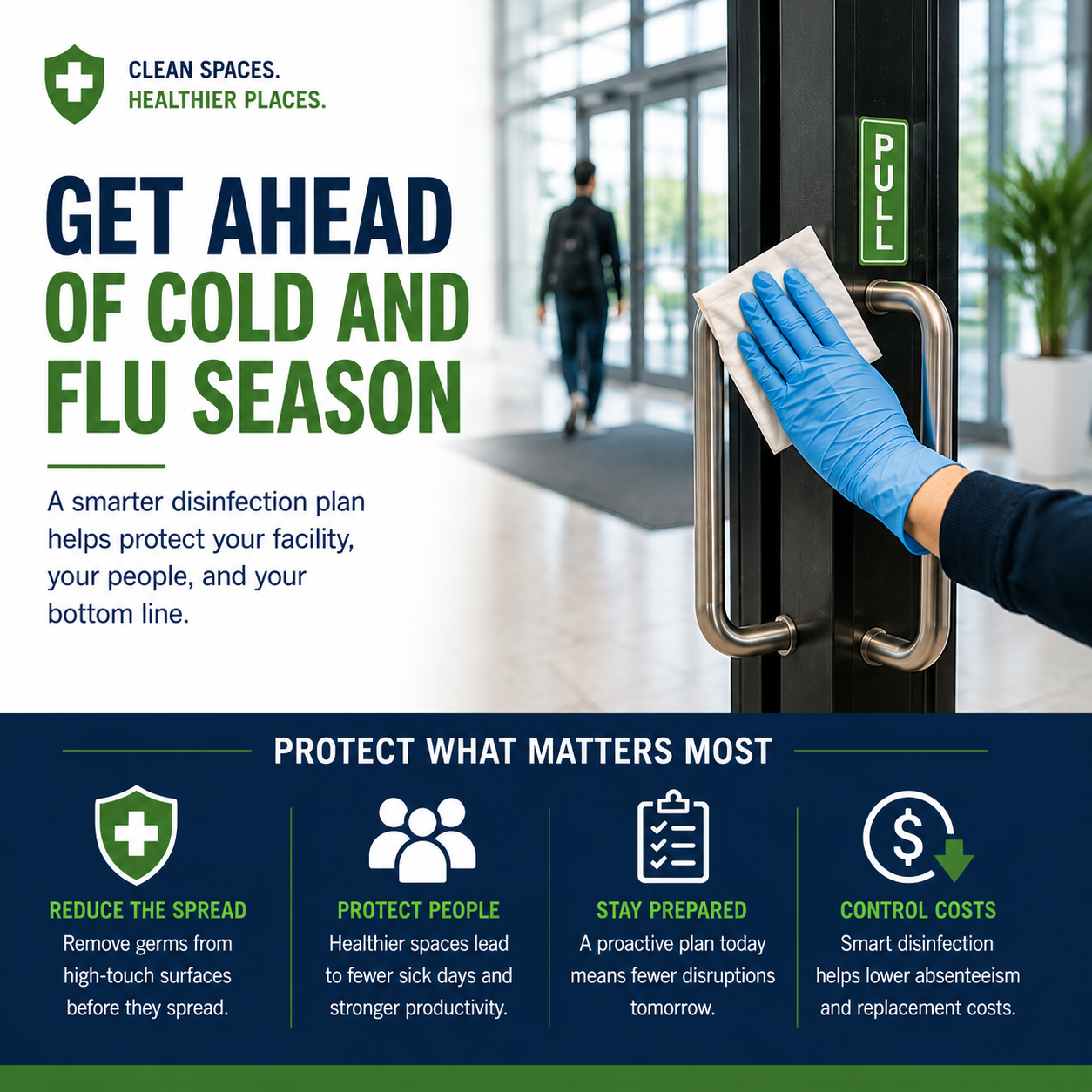
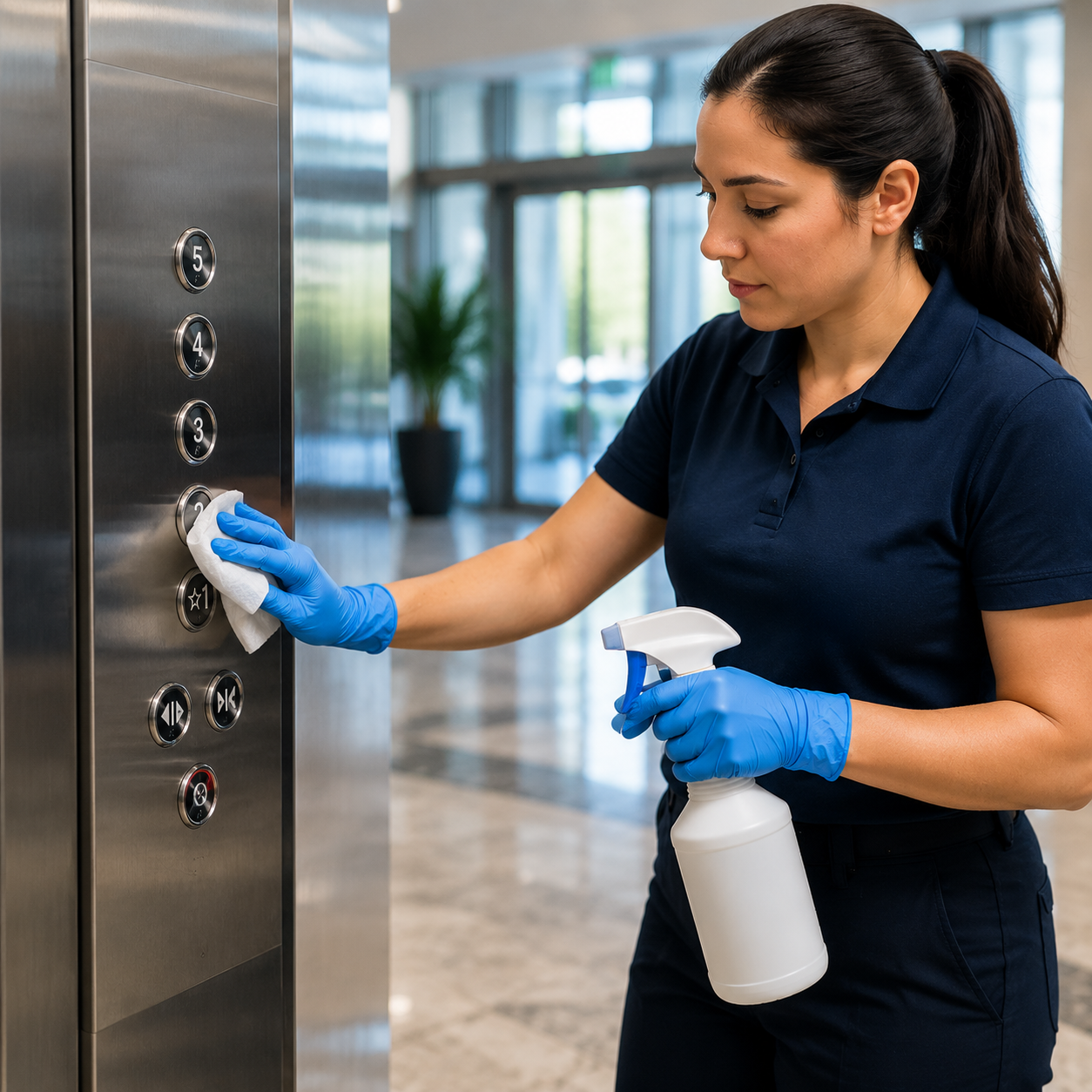
Door handles, push plates, and pull bars at main entrances are among the highest-contact surfaces in any building. They are touched continuously throughout the day by everyone who enters and exits, including people who are already symptomatic. Disinfecting these surfaces more frequently during cold and flu season, rather than only during standard cleaning rounds, reduces transmission at the point where most people first enter the building.
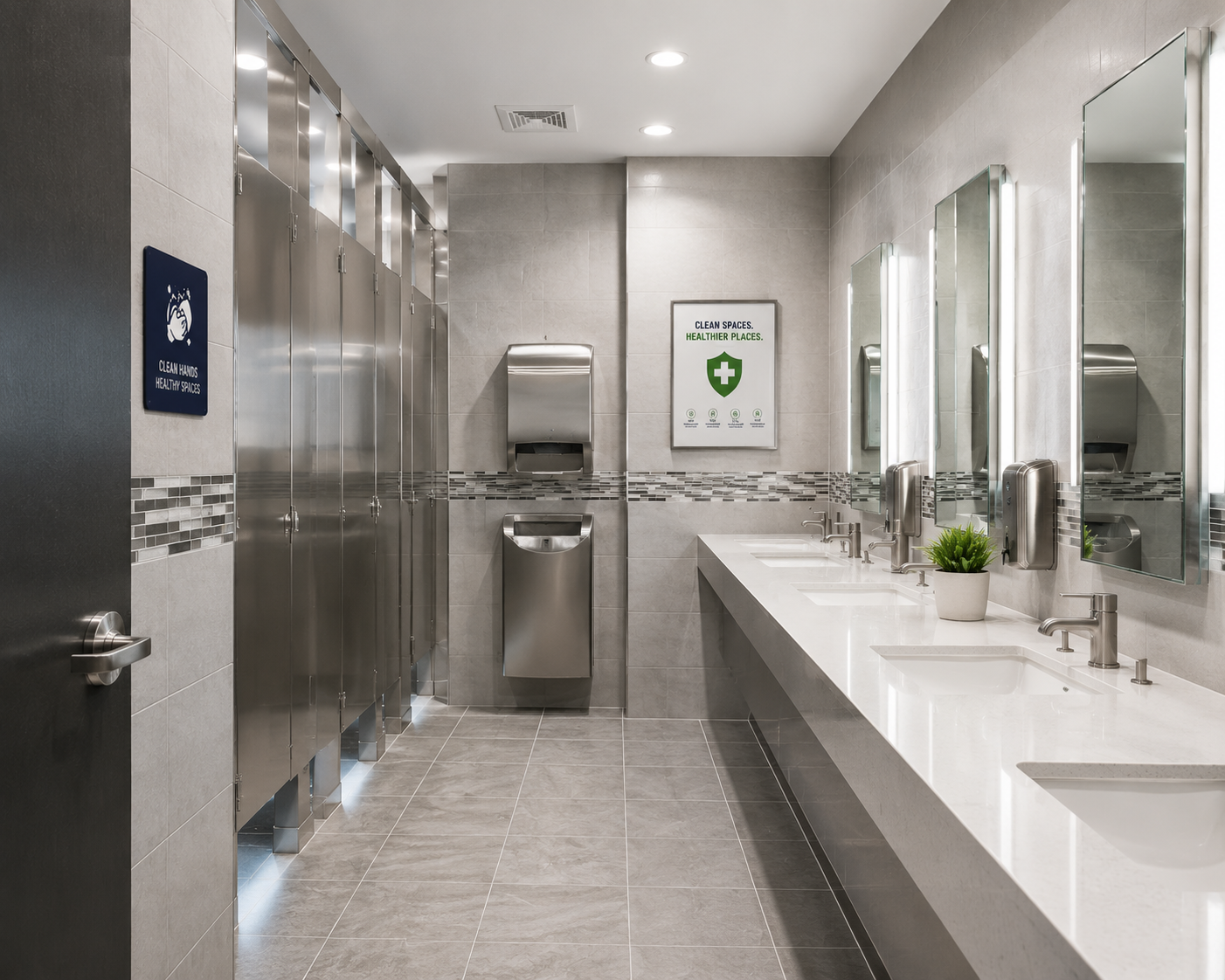
Restrooms
Restroom fixtures, particularly faucet handles, soap dispensers, toilet flush handles, and door hardware, carry significant pathogen loads year-round. During cold and flu season, viral contamination on these surfaces increases as more building occupants get sick.
The most effective approach is a disinfectant cleaner that cleans, disinfects, and deodorizes in a single application. Spartan NABC Non-Acid Disinfectant Bathroom Cleaner is an example of a product designed for exactly this kind of regular, complete restroom disinfection. Its EPA registration covers a broad spectrum of pathogens, including common cold and flu viruses, and its formulation is safe for the porcelain, tile, and grout surfaces found in commercial restrooms.
Breakrooms and shared kitchens
Breakroom surfaces, including countertops, appliance handles, coffee maker buttons, and refrigerator doors, are touched repeatedly by different people throughout the workday. These surfaces are often treated as a lower priority than restrooms, but during cold and flu season, they become a major contamination point.
An all-purpose cleaner with disinfecting capability, applied to breakroom surfaces at the start and end of each shift, addresses viral buildup on shared surfaces without requiring a separate disinfecting step.
Shared equipment and workstations
Keyboards, phones, copier and printer touchpads, and shared workstation surfaces are consistently overlooked in standard cleaning programs but become high-risk surfaces as soon as one sick person uses them. In open-plan offices, shared equipment, and call centers, these surfaces deserve specific attention during peak illness season.
Disinfecting wipes or a spray disinfectant compatible with electronics and hard surfaces, distributed to workstations or placed at shared equipment stations, lets building occupants take a quick disinfecting step between cleaning rounds.
Choosing the right disinfectant for cold and flu season
Not all cleaning products disinfect, and not all disinfectants are equal. Cold and flu season is a good time to review your current product lineup and confirm that the products your team uses are registered to kill the pathogens you are trying to control.
Look for EPA registration
An EPA-registered disinfectant has been tested and approved to kill specific pathogens at the concentrations and dwell times listed on the label. The EPA Emerging Viral Pathogens list is particularly relevant for facilities focused on flu prevention, as products on this list have demonstrated effectiveness against respiratory viruses.
Understand dwell time
Dwell time is how long a disinfectant must remain wet on a surface to achieve its registered kill claim. This is one of the most commonly overlooked factors in commercial disinfection programs. A product with a five-minute dwell time that is wiped off after thirty seconds has not disinfected the surface.
Train your team to understand dwell-time requirements for every product in use and apply disinfectants in a way that keeps surfaces wet for the required period.
Match the product to the surface
Some disinfectants are not safe for all surfaces. Harsh formulations can damage electronics, corrode metal fixtures, or degrade grout over time. Review the product data sheet for each disinfectant in your program and confirm that it is appropriate for the surfaces your team is applying it to.
Building a cold and flu season disinfection schedule
A targeted disinfection schedule for cold and flu season does not require a complete overhaul of your cleaning program. It requires a focused increase in frequency on the highest-risk surfaces and a confirmation that the right products are being used correctly.
Daily additions during cold and flu season:
Increase disinfection frequency on all entryway hardware, elevator buttons, and main lobby surfaces. Treat restroom high-touch surfaces at least twice per shift in high-traffic facilities rather than once. Add a midday wipe-down of breakroom surfaces in addition to end-of-day cleaning.
Weekly during peak season:
Confirm dwell times with your cleaning team and reinforce proper technique. Spot-check product dilutions if your team is using concentrates. Audit shared equipment and workstations for inclusion in the disinfection schedule.
Product inventory:
Check your supply levels before the season begins. Running out of EPA-registered disinfectant in late October or November is avoidable with basic planning. Banner Systems can help you project usage and set up reliable restocking, so your team never runs short during peak demand.
Common mistakes that reduce the effectiveness of your disinfection program
Confusing cleaning with disinfecting. A general-purpose cleaner removes soil and dirt from a surface. It does not necessarily kill viruses and bacteria. If your team is using a cleaner that is not registered as a disinfectant, they are cleaning but not disinfecting. Review your product labels and confirm the distinction.
Skipping dwell time. As noted above, a disinfectant that does not stay wet on the surface for the required time will not achieve its registered performance. This is among the most common reasons a disinfection program underperforms.
Focusing only on visible soil. A surface can look clean and still carry a significant pathogen load. Cold and flu season disinfection is about reducing invisible viral contamination, not just removing visible dirt.
Not training staff on seasonal protocol changes. If your facility increases high-touch surface disinfection in the fall, your cleaning team needs to know what is changing and why. A brief training update at the start of cold and flu season ensures everyone is aligned on the new schedule.
Using the wrong product for the job. A restroom disinfectant formulated for porcelain and tile is not the right product for an office workstation. Match the disinfectant to the surface type and target pathogen.
Frequently asked questions
When should I start preparing my facility for cold and flu season? Start preparing in September, before illness rates begin to rise. Review your disinfectant supply levels, update your cleaning schedule, and brief your team on protocol changes before the first wave hits. Facilities that prepare in advance handle peak season more effectively than those that respond reactively.
What is the difference between a sanitizer and a disinfectant? Sanitizers reduce bacteria on a surface to a level considered safe by public health standards. Disinfectants kill a broader spectrum of pathogens, including viruses, at higher rates. For cold and flu season disinfection in commercial facilities, an EPA-registered disinfectant is generally the appropriate product for high-touch surfaces.
How do I know if my current cleaning products will kill cold and flu viruses? Check the EPA registration number on the product label and look it up on the EPA List N database, which lists disinfectants effective against SARS-CoV-2 and other respiratory viruses. Products effective against those pathogens are generally effective against common cold and flu viruses as well.
How often should high-touch surfaces be disinfected during cold and flu season? In high-traffic commercial facilities, high-touch surfaces including door hardware, elevator buttons, and restroom fixtures should be disinfected at least twice daily during peak illness season. In healthcare facilities or facilities with vulnerable populations, more frequent disinfection may be appropriate.
Do I need to change my cleaning products for cold and flu season, or just my schedule? In many cases, adjusting the frequency and technique of your existing program is sufficient, provided your current products are EPA-registered disinfectants. If your cleaning program relies on cleaners that are not registered as disinfectants, cold and flu season is a good time to review and update your product selection.
Get your facility ready before the first sick day
Cold and flu season is predictable, and a well-prepared facility handles it better. The difference is a targeted disinfection schedule, the right products applied with the right technique, and a team that understands what they are doing and why.
Banner Systems has been helping facility teams across Massachusetts, Rhode Island, and New Hampshire build cleaning programs that protect building occupants year-round. Our team carries EPA-registered disinfectants, janitorial supplies, and the knowledge to help you put together a cold and flu season protocol that works.
Contact our team at bannersystemsma.com to review your current program and find the right products for your facility. We have been helping New England facilities run better since 1962.