Entrance matting for commercial facilities: protect your floors and your people this fall
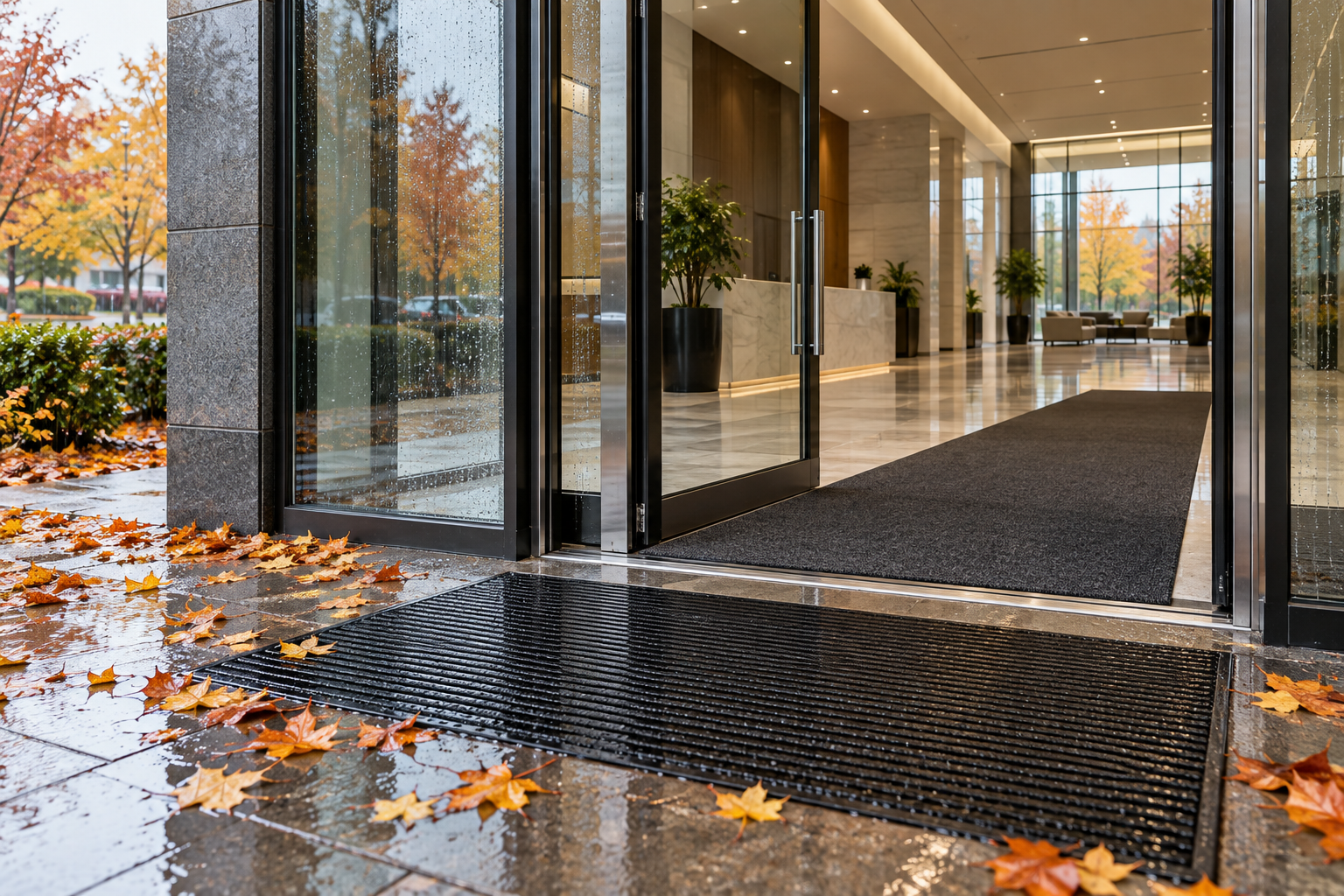
October in New England brings a familiar set of facility headaches. Wet leaves pile up on walkways and get tracked straight into the lobby. Cold rain soaks every pair of shoes that crosses the threshold. Mud from landscaping crews and fall cleanup finds its way onto floors that stayed clean all summer.
By month’s end, most commercial floors are already showing it. Moisture collects at the door and creates slip hazards. Grit grinds into floor finish and dulls it weeks ahead of schedule. Custodial teams spend more of every shift chasing dirt that should never have made it inside.
The right entrance matting for commercial facilities stops most of that problem at the door. This guide walks through how a three-zone matting system works, how to match mats to each entrance, and how to keep them performing from the first fall rain through the last spring thaw.
Why entrance matting for commercial facilities matters most in fall
In summer, routine mopping and regular cleaning rounds keep most entryways under control. Fall changes the math.
Rain, wet leaves, and early frost dramatically increase the moisture and soil coming through the door. Industry estimates suggest that most of the dirt inside a commercial building arrives on the bottoms of shoes, and a well-designed matting system can capture most of it before it travels past the lobby. Every bit of soil a mat captures at the door is soil that never reaches your carpets, hard floors, or interior spaces.
Fall is also the dress rehearsal for winter. In Massachusetts, Rhode Island, and New Hampshire, October leaves give way to the snow, slush, and ice-melt residue of December. A matting program that is sized, placed, and maintained correctly now is ready for the harder months ahead. One that is not will show its gaps at the first nor’easter.
A good mat system delivers four results:
- Less floor damage and longer life for your floor finish
- Fewer labor hours spent cleaning entryways and adjacent halls
- Lower risk of slip and fall incidents during the wettest months
- A cleaner first impression for every visitor, tenant, and employee
The three zones of an effective entrance matting system
Not all entrance mats do the same job. The most effective systems use different mat types for each stage of the walk from the parking lot to the interior floor.
Zone 1: Outside the door
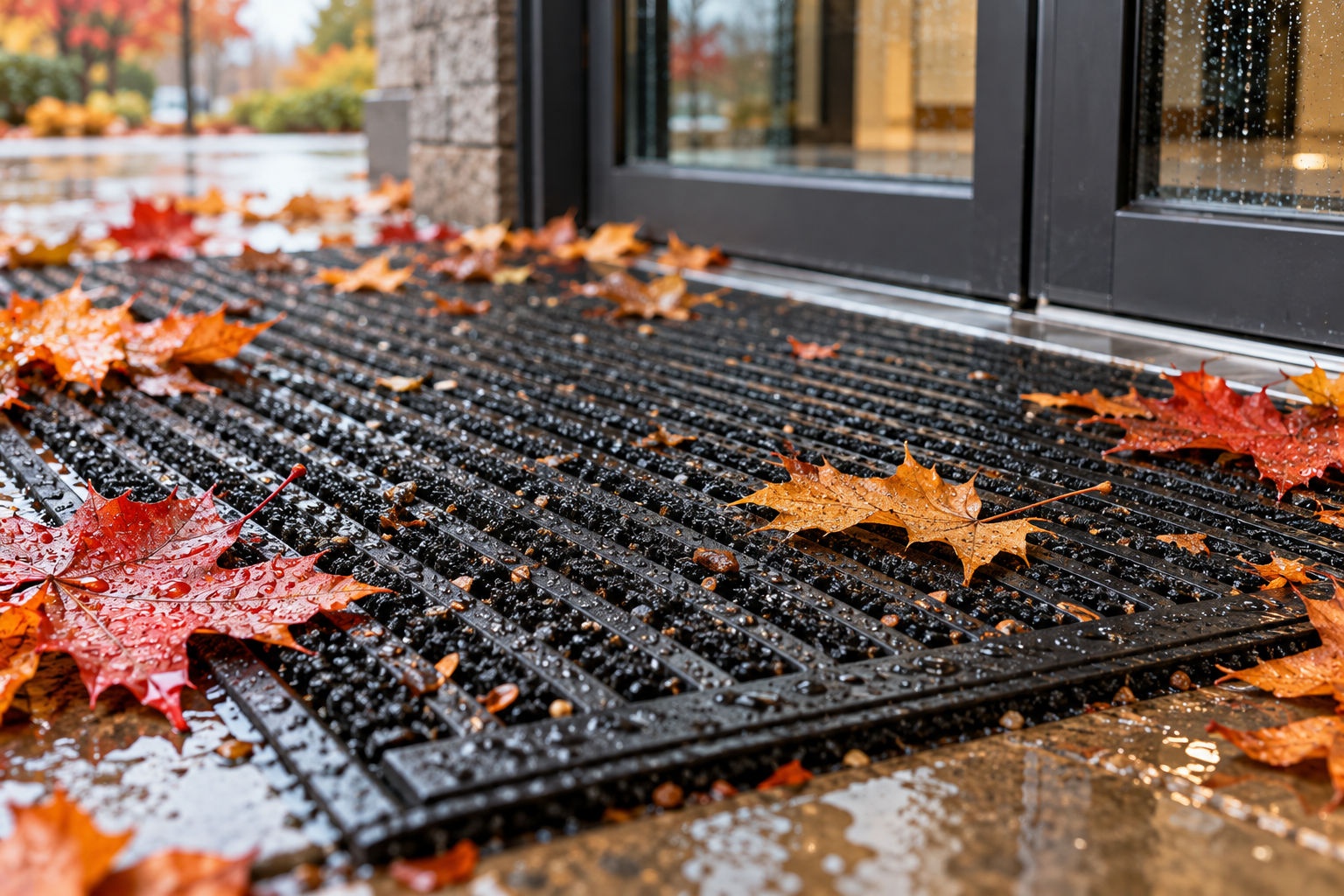
The first zone sits directly outside the entrance. Its job is to scrape heavy soil, leaves, sand, and moisture off shoe soles before anyone steps inside, and it captures the heaviest debris of the entire system.
Outdoor mats need to withstand direct weather, heavy foot traffic, and freezing temperatures. Look for a stable, slip-resistant backing and an open or textured surface that lets water drain away instead of pooling. Check these mats often, because a mat buried under wet leaves or packed with grit stops scraping.
Zone 2: Inside the door
The second zone sits just inside the entrance, usually in the vestibule. It captures the finer grit and moisture that made it past the outdoor mat. A combination scraper and wiper mat works well here because it removes remaining particles and starts drying the shoe.
Mat length matters more than most facilities realize. Industry guidance generally recommends at least ten to fifteen feet of total matting from the entrance, enough for several full steps on each foot. Many buildings use a single short mat that covers one or two steps, letting most soil and water pass through to the interior floor.
Zone 3: Transition to the interior floor
The third zone is the final stretch before the main floor. A wiper or finishing mat pulls off the last of the moisture so shoes are dry before they reach polished tile, sealed concrete, or coated hard surfaces. In buildings with hard floor lobbies, this zone does the most to prevent slips, because residual moisture on a finished floor is where most entryway falls begin.
Matching mat type to each entrance
Every entrance in a facility has different traffic, exposure, and floor conditions, so one mat rarely fits every door.
Main entrances need durable, high-capacity mats in all three zones, sized for peak traffic like morning arrivals and lunch returns. Higher pile wiper mats inside hold more water before they need to be changed or cleaned.
Side and service entrances often see fewer people but heavier soil from deliveries, maintenance work, and grounds crews. Aggressive scraper mats are the priority at these doors.
Healthcare, schools, and food service facilities have added concerns around hygiene and contamination. Antimicrobial mat options are available for facilities where controlling bacteria at the entrance matters as much as controlling soil and moisture.
Workstations and service counters are a separate need. Anti-fatigue mats at reception desks, security posts, and production lines reduce strain for staff who stand for long shifts.
Keeping entrance mats performing all season
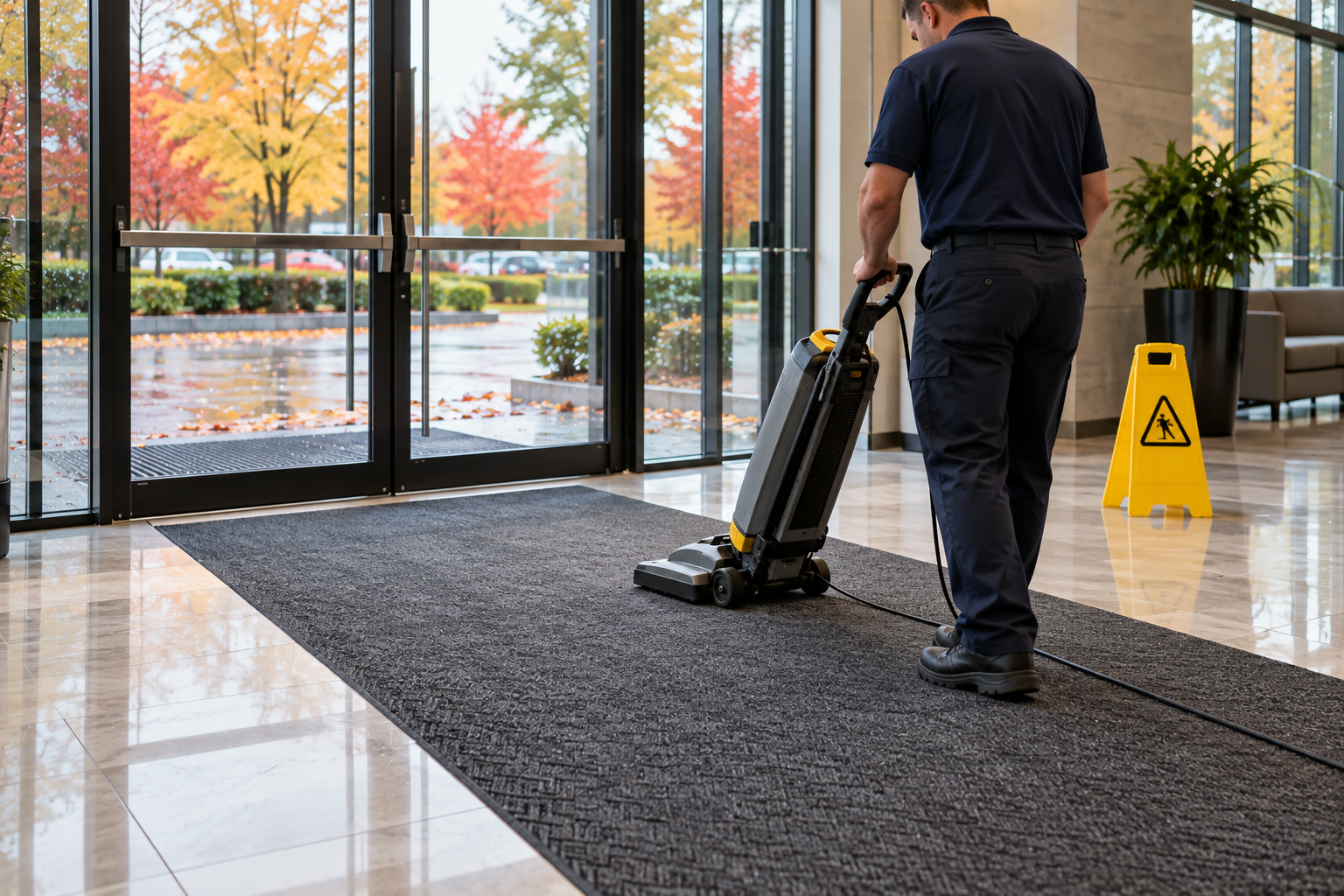
A saturated, crushed, or curled mat stops doing its job. Maintenance matters just as much as selection.
Inspect mats daily during wet weather. A mat that is already soaked cannot hold more water. Keep a backup mat on hand so you can rotate it in while the primary mat dries.
Vacuum mats on a set schedule. A mat full of captured soil has no room left for more. During peak wet weather, high-traffic entrance mats may need vacuuming every day.
Check edges and backing. A mat with curling edges or a worn backing becomes a trip hazard instead of a safety tool. Replace mats that no longer lie flat.
Cover the full traffic path. A mat narrower than the doorway leaves bare floor where wet shoes land. Make sure matting covers the full width people actually walk, not just the center of the door.
Plan for winter now. Once ice melt season starts, mats also catch salt and chemical residue that can etch and haze the floor finish. Pair your matting program with a neutral cleaner in your floor care routine to keep that residue from building up.
Common entrance matting mistakes
Choosing mats on upfront cost alone. Thin, lightweight mats compress quickly, lose their capacity within weeks, and often develop backing problems. A commercial-grade mat performs better and lasts longer, which makes it the more cost-effective choice over its service life.
Using residential mats in a commercial building. Mats built for a front porch cannot handle hundreds of people a day. They saturate fast and wear out faster.
Skipping the interior zones. A single outdoor mat is not a system. Without matting inside the door, everything the outdoor mat misses goes straight onto the lobby floor.
Cleaning mats too rarely. A full, wet mat doesn’t protect anything. Build mat care into the daily cleaning schedule during the wet months.
Waiting for a problem. The best time to review your entrance matting is before the first heavy fall rain, not after a slip incident or a complaint about the lobby floor.
Frequently asked questions
How much entrance matting does a commercial facility need?
Most industry guidance recommends ten to fifteen feet of combined matting from the entrance to the interior floor. High traffic buildings and facilities in wet climates like New England benefit from the longer end of that range.
How often should commercial entrance mats be cleaned in fall and winter?
Vacuum high-traffic entrance mats daily during wet weather and give them a deeper cleaning at least once a week. Inspect for saturation every day and rotate in a dry mat when needed.
What is the difference between a scraper mat and a wiper mat?
A scraper mat has a firm, aggressive surface that removes heavy soil, sand, and debris from shoe soles. A wiper mat has a softer, absorbent surface that pulls off moisture and fine particles. An effective system uses both.
Can entrance mats reduce slip and fall incidents?
Yes. Properly sized and maintained entrance mats keep moisture off hard interior floors, and a dry shoe on a dry floor is far less likely to slip than a wet shoe on a polished surface.
When should entrance mats be replaced?
Replace mats when the backing deteriorates, the edges curl and will not lie flat, the surface is crushed or worn smooth, or the mat no longer covers the traffic path. A mat that has lost its pile or scraping texture no longer protects your floors.
Get your entrance matting ready before the weather turns
Entrance matting for commercial facilities is one of the simplest, most cost-effective investments in any facility maintenance program. Every pound of soil and every puddle a mat stops at the door is labor your team saves, and floor finish you keep.
Banner Systems is a third-generation, family-owned Jan-San (janitorial and sanitation) distributor based in Brockton, Massachusetts. Since 1962, our team has helped facilities across Massachusetts, Rhode Island, and New Hampshire find the right janitorial supplies and floor care products for every season, including the long New England winter.
Contact our team to walk through your entrances and find the right matting setup for your building: https://bannersystemsma.com/contact-us/