If your lobby floors look cloudy by mid-December, you are not alone. Learning how to remove ice melt residue from hard floors is one of the most common winter questions we hear from facility managers across Massachusetts, Rhode Island and New Hampshire. Every boot that comes in from a salted sidewalk carries a little calcium chloride or rock salt with it, and that white film builds up fast.
The good news is that ice melt haze is easy to fix once you know why it happens. The wrong cleaner can make it worse, and the right one can clear it in a single pass. This guide walks through what causes the film, which products actually remove it, a simple daily routine for your crew, and how to keep residue from coming back for the rest of the season.
Quick answer: To remove ice melt residue from hard floors, dust mop first, then damp mop with a floor neutralizer diluted to the label rate, using clean water and a fresh microfiber pad. Neutralizers break down the alkaline salt film that regular cleaners leave behind. Repeat daily during storms and add entrance matting to stop residue at the door.
Why ice melt leaves a white film on your floors
Most commercial ice melts are salts. Rock salt, calcium chloride and magnesium chloride all work by lowering the freezing point of water. Once they get tracked inside and the moisture dries, the salt stays behind as a fine, chalky layer.
The film is alkaline
Ice melt residue has a high pH. Most general purpose cleaners and degreasers are also alkaline. When you mop an alkaline residue with an alkaline cleaner, you add to the problem instead of removing it. That is why some floors look worse after mopping than before.
Residue damages floor finish over time
The haze is not only a looks problem. Salt crystals are abrasive, so every step grinds them into the finish like fine sandpaper. Left alone, residue dulls the gloss, softens the finish and shortens the time between full strip and recoat jobs. If you invested in a summer strip and refinish, winter residue is the fastest way to undo it.
Wet residue is a slip hazard
Melted snow mixed with salt makes a slick film near entrances. Keeping walking surfaces clean and dry is a basic safety expectation under OSHA’s walking and working surfaces standards, and winter entrances are where most slips happen.

Neutralizer vs. neutral cleaner vs. all-purpose cleaner
These three products sound alike, but they do different jobs. Picking the right one is the biggest factor in clearing salt haze.
| Product type | What it does | Best use in winter | Example from our catalog |
|---|---|---|---|
| Floor neutralizer | Mildly acidic. Breaks down alkaline salt film and brings the floor back toward a neutral pH. | Removing existing ice melt haze. Daily at entrances during storms. | Spartan Shineline Floor Prep Neutralizer and Conditioner |
| Neutral floor cleaner | pH neutral. Lifts everyday soil without harming finish. | Routine mopping on days with little salt tracking. | Straightaway Neutral Floor Cleaner |
| Damp mop detergent | Gentle daily cleaner made for finished floors. | Interior corridors away from the entrance zone. | Spartan Damp Mop Detergent |
| Alkaline all-purpose cleaner or degreaser | Cuts grease and heavy soil. | Avoid on salt haze. It can leave more residue behind. | Keep these for kitchens and shops. |
How to remove ice melt residue from hard floors, step by step
This routine works on vinyl composition tile, sealed concrete, terrazzo and most finished resilient floors. Always read the product label for the correct dilution and any surface warnings.
Step 1: Dry soil removal first
Run a dust mop or a lobby broom over the entrance area before any water touches the floor. Loose grit and salt crystals turn into slurry once they get wet, and slurry spreads haze across a wider area.
Step 2: Mix the neutralizer at the label rate
More is not better. Over-concentrating a neutralizer can leave its own film. Use a dilution control system or a measuring cup and fill the bucket with cool to lukewarm water.
Step 3: Damp mop with clean pads
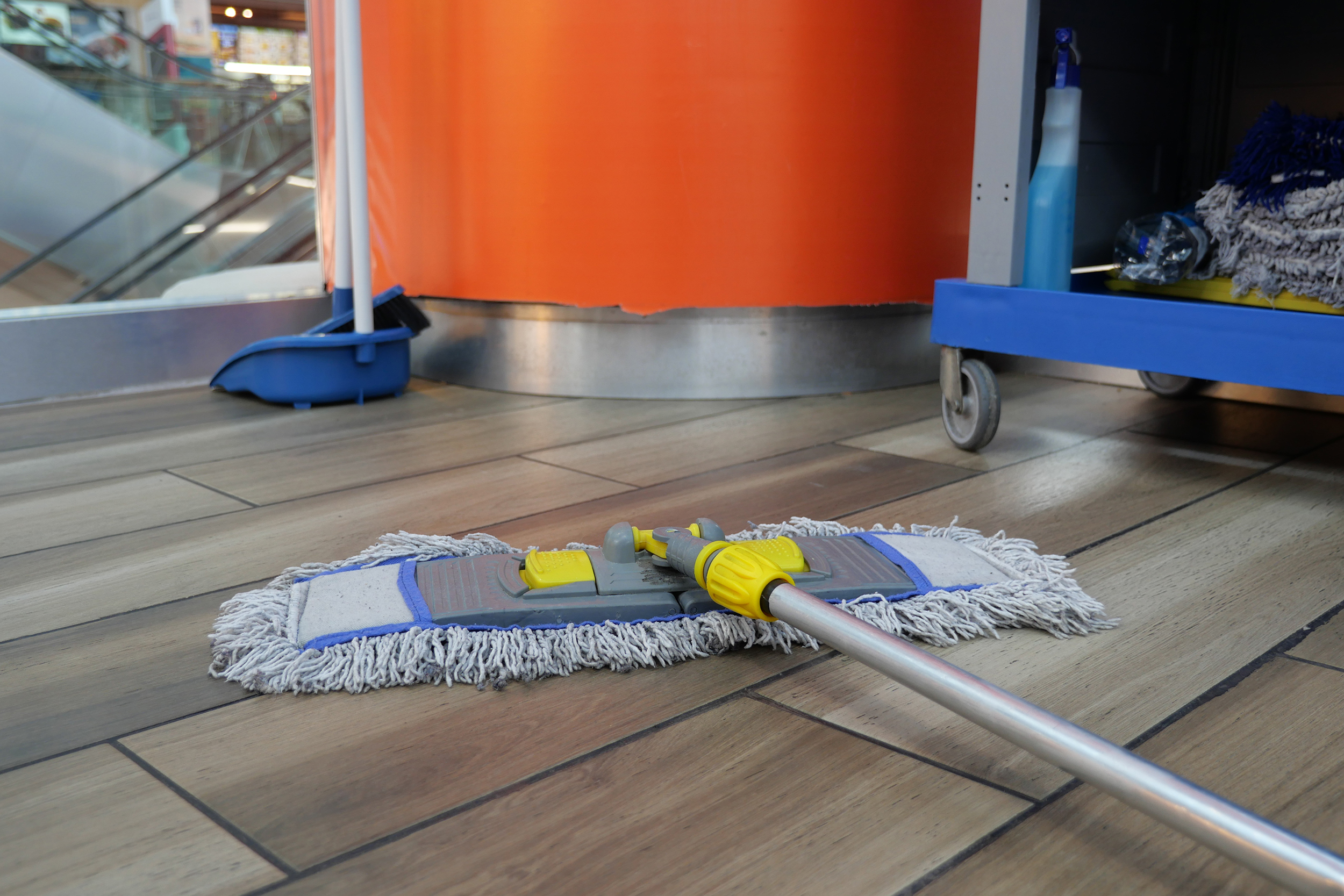
Use a microfiber flat mop or a looped wet mop wrung out well. A Janico 18″ microfiber wet mop pad picks up dissolved salt instead of pushing it around. Swap pads every few hundred square feet in heavy traffic.
Step 4: Change the water often
Salty mop water redeposits the same residue you are trying to remove. A two-compartment setup or a 35 quart bucket and wringer makes it easy to dump and refill without slowing your crew down.
Step 5: Let it dry, then check the shine
Once the floor dries, look at it from a low angle near a window. If you still see streaks, do a second pass with neutralizer. If the floor looks dull but clean, it may need a burnish or a maintenance coat of finish.

Daily winter floor care schedule
Ice melt residue is easier to prevent than to remove. A simple schedule keeps the film from building up between storms.
| When | Task | Area |
|---|---|---|
| Every 2 to 3 hours on storm days | Dust mop or sweep, spot mop puddles | Vestibules and lobbies |
| End of each day | Damp mop with neutralizer | First 15 to 20 feet inside each entrance |
| Weekly | Neutral clean and burnish | Main corridors and high-traffic lanes |
| Weekly | Vacuum and extract entrance mats | All entry matting |
| Spring | Deep scrub and recoat or full strip | All hard floors |
Do not forget carpet and entrance mats
Salt does the same thing to carpet that it does to tile. White rings and crunchy fibers mean residue has soaked in. A prespray like Spartan SSE Carpet Prespray and Spotter loosens the salt, and an extraction cleaner such as Spartan Xtraction II pulls it out. For a full walkthrough, see our guide to carpet extraction with Spartan products.
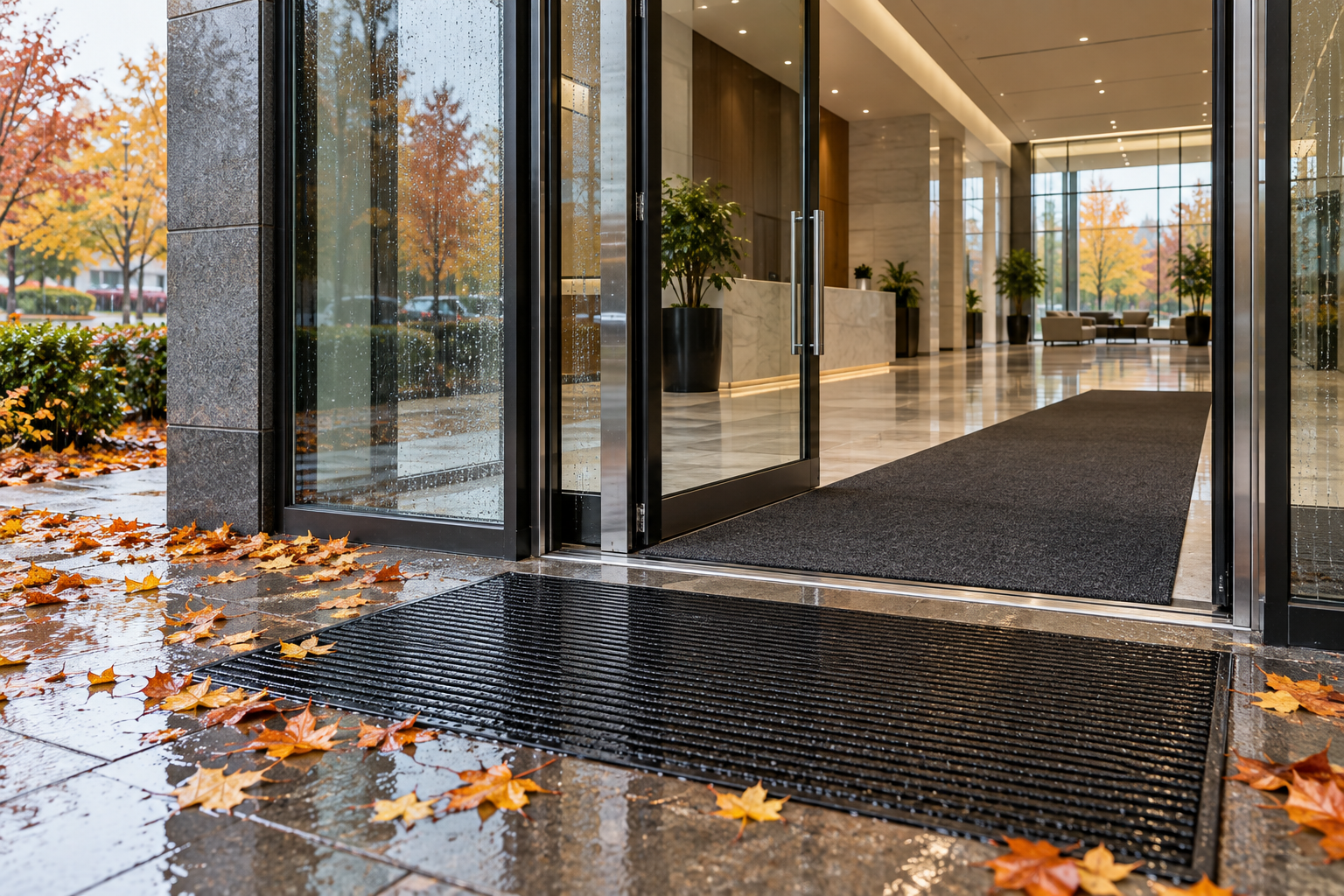
Entrance mats are your first line of defense. A good three-zone system can trap most of the moisture and grit before it reaches your finish. Our entrance matting guide explains which mat goes where, and you can browse commercial floor mats in our online catalog.

Choose an ice melt that is easier on floors
The ice melt on your sidewalks affects how much residue ends up inside. Calcium chloride works at very low temperatures and is a common choice for New England winters, but it can leave an oily-feeling film if it is over-applied. Blends marketed as gentler on surfaces and landscaping may reduce tracking. Whatever you use, spread only what you need. Doubling up does not melt ice twice as fast, it just doubles the residue.
We carry Scotwood Excel Calcium Chloride Pellets and Scotwood Green Scapes Ice Melt in our ice melt category. For more on picking a product, read our commercial ice melt guide.

Which approach fits your building?
- If your lobby floor looks cloudy right after mopping, switch from your all-purpose cleaner to a floor neutralizer at the entrance zone.
- If you only see haze after big storms, keep neutralizer on the janitor cart for storm days and use a neutral cleaner the rest of the time.
- If residue spreads deep into hallways, your entrance matting is too short. Add a longer scraper and wiper mat system.
- If the floor stays dull even after neutralizing, the finish is worn. Plan a burnish, a scrub and recoat, or a spring strip.
- If carpet near doors has white rings, prespray and extract weekly through the season.
Frequently asked questions
Can I use vinegar to remove ice melt residue?
Vinegar is acidic, so it can cut salt film, but it is not made for finished commercial floors and the strength is not consistent. A purpose-built floor neutralizer gives predictable results, is labeled for use on floor finish, and is easier for crews to dilute the same way every time.
How often should I neutralize floors in winter?
Neutralize entrance areas at least once a day during periods of snow and ice melt use, and more often on storm days. Interior hallways usually only need a neutral cleaner unless you see haze spreading. Back off to a neutral cleaner once sidewalks are dry.
Why does my floor look worse after mopping?
Your cleaner is probably alkaline, and so is the salt residue. Mopping with an alkaline product, dirty water or a dirty mop leaves an even thicker film. Switch to a neutralizer at the entrance, change water often and use clean microfiber pads.
Does ice melt damage vinyl and VCT floors?
Ice melt itself is unlikely to ruin the tile, but the residue dulls and softens floor finish, and the grit scratches it. Over a season that adds up to a worn finish and an earlier strip job. Daily removal protects your finish and your labor budget.
What is the best way to remove salt from carpet?
Vacuum first, then apply a carpet prespray to loosen the salt. Follow with hot water extraction using a carpet extraction cleaner. Treat white rings as soon as they appear, since salt left in carpet fibers is much harder to remove later in the season.
The bottom line
Ice melt residue is an alkaline salt film. Alkaline cleaners cannot remove it, but a floor neutralizer can. Dust mop first, damp mop with neutralizer at the label rate, change water often, and stop residue at the door with good matting. Do that every day of the season and your floors will come through winter looking like they did in the fall.