You walk into a building on a warm May morning, and something is off. You cannot always name it immediately, but you know it. A restroom that smells like it was cleaned, but not really cleaned. A breakroom with something faintly wrong underneath the surface. A trash area near the loading dock that the heat has not been kind to.
Odor problems in commercial facilities are year-round, but they intensify significantly as temperatures rise in the spring and summer. If your facility maintenance program is not set up to address root causes, you spend the warm months reacting rather than preventing issues.
This guide covers why odors develop, where they tend to concentrate in commercial buildings, and what a practical odor-control program looks like.
Why warm weather makes odor problems worse
Odor in commercial facilities is almost always biological in origin. Bacteria, mold, mildew, and organic residue are the primary culprits. All of them thrive in warmth.
As temperatures climb in May and June, the conditions inside restrooms, breakrooms, locker rooms, and waste areas become significantly more favorable for microbial activity. A restroom that held up well through the winter can develop a persistent odor problem within weeks once humidity rises and the air warms.
The challenge for facility managers is that surface-level cleaning often does not address the source. Mop over a floor, spray a deodorizer, empty the trash, and the space may smell acceptable for a few hours. But if the underlying bacterial load has not been reduced, the odor returns quickly and often gets worse over the course of a day.
Effective odor control requires treating the source, not masking it.
Where odors concentrate in commercial facilities
Restrooms
Restrooms are the most common source of odor complaints in any building, and their causes are well understood. Uric acid deposits build up on and around fixtures over time. Grout lines and floor drains harbor bacteria that standard mopping does not fully address. Inadequate ventilation accelerates the problem.
Cleaning products that disinfect and deodorize in a single step are the right tool here, not separate applications. Spartan NABC Non-Acid Disinfectant Bathroom Cleaner is a strong example: it cleans, disinfects, and deodorizes in one pass, with an EPA registration covering COVID-19 disinfection and a formulation safe for porcelain, tile, and grout. The floral fragrance is persistent enough to signal a properly cleaned space without the harsh chemical smell that can replace one problem with another.
Floor drains deserve specific attention. They are frequently overlooked and are often the primary odor source in a restroom that otherwise appears clean. Treating drains regularly with an enzymatic or microbial deodorizer breaks down the organic material that feeds bacterial growth at the source.
Breakrooms and food service areas
Breakrooms generate consistent organic waste: food residue on surfaces, spills that were wiped but not fully cleaned, trash receptacles that are emptied but never sanitized, and refrigerators that accumulate odors over months.
The fix here is a combination of the right cleaning products and consistent protocols. All-purpose cleaners used at the correct dilution, applied to surfaces including the inside of cabinets and the walls around trash receptacles, go further than most teams realize. Spartan Xcelente All Purpose Cleaner, at a dilution of 1 to 3 ounces per gallon, handles most breakroom surface cleaning without leaving residue or fragrance overlap from incompatible products.
Trash receptacles should be cleaned, not just emptied. A liner change does not address the buildup inside a receptacle that has been in daily use for months.
Locker rooms and fitness areas
Locker rooms combine the worst of multiple odor sources: moisture, body soil, and textiles that hold organic material through repeated use. Warm weather intensifies all of them.
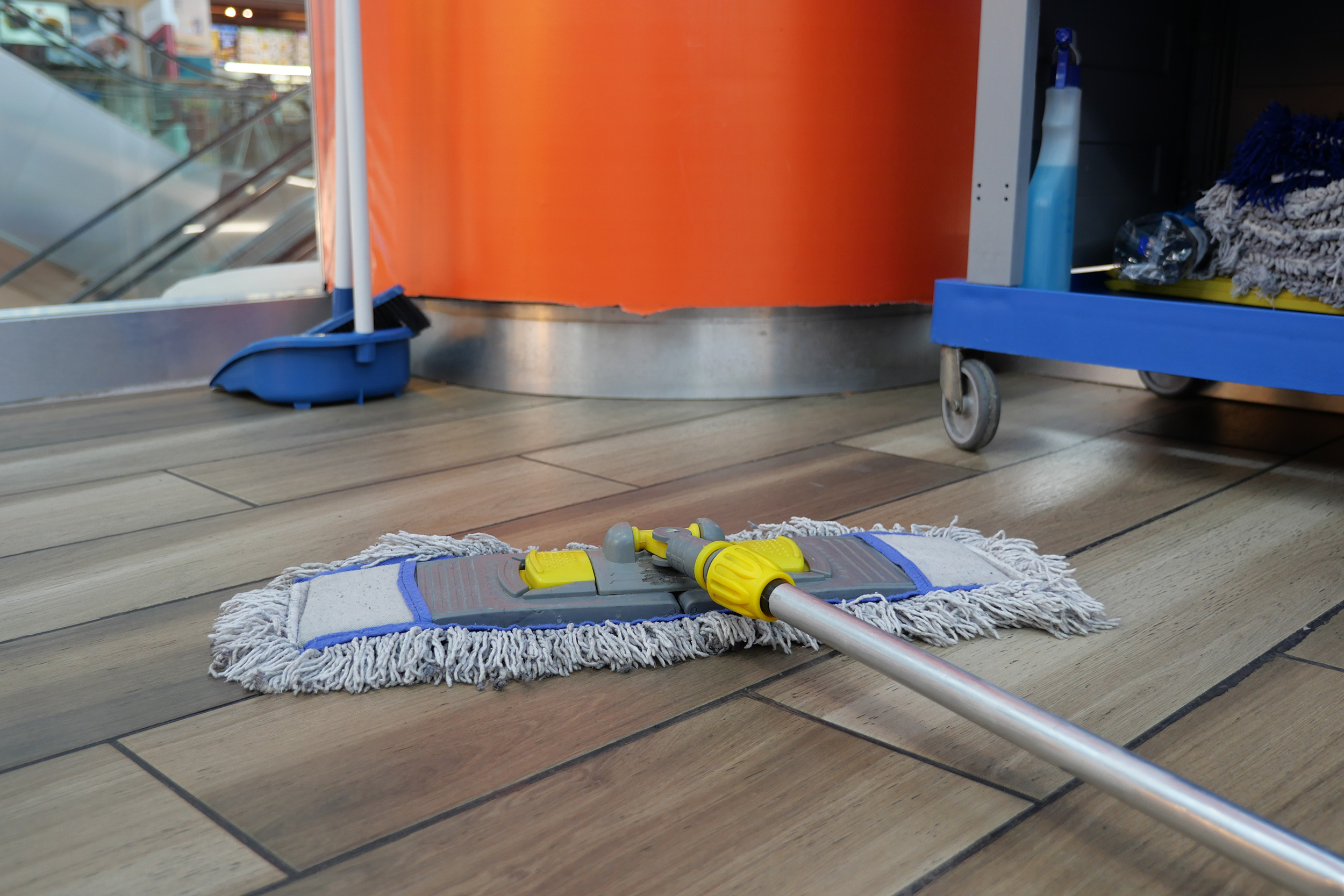
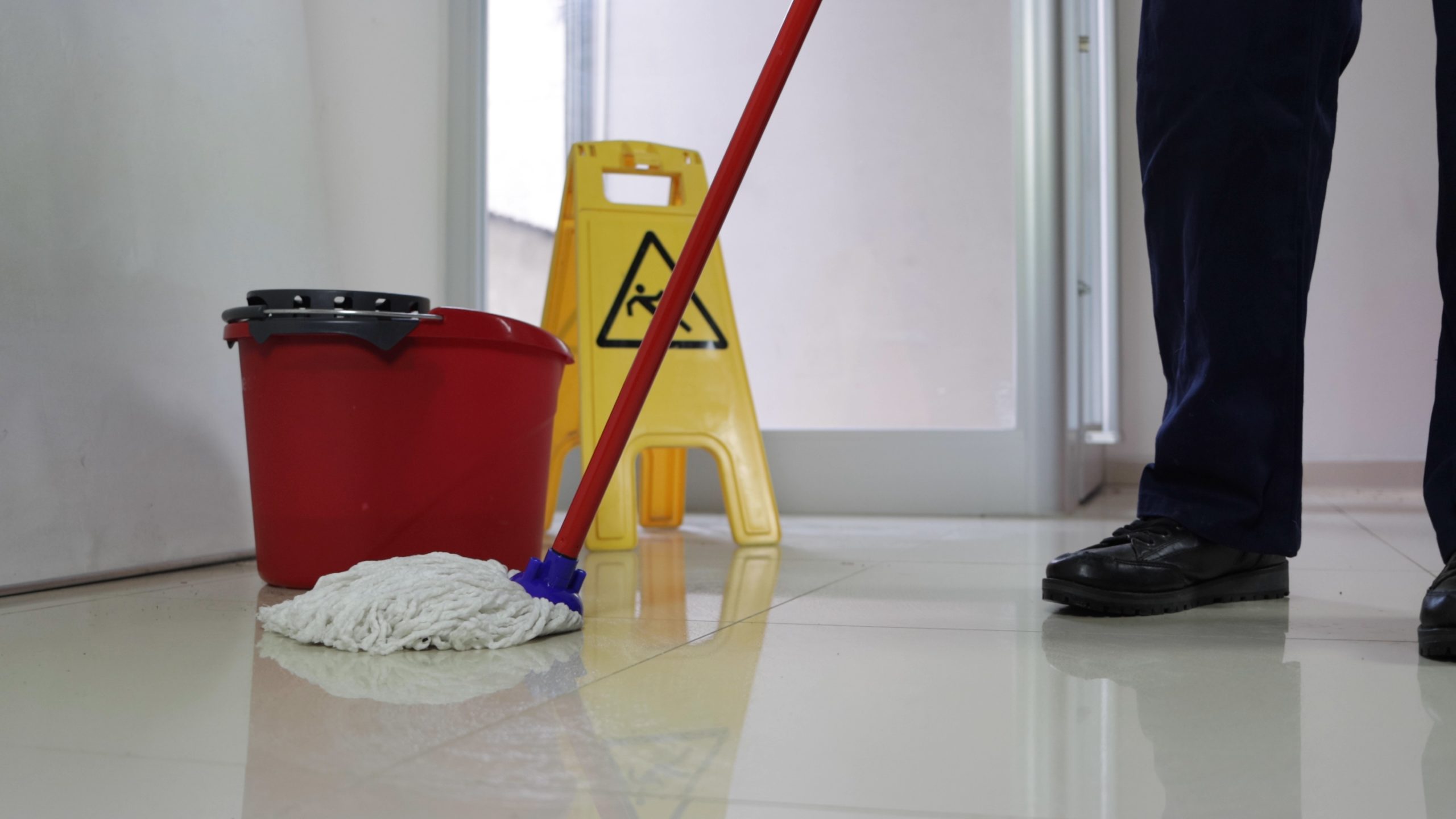
In these spaces, surface disinfection is only part of the answer. Air circulation and drying time matter. Mop heads and other cleaning tools used in locker rooms need to be cleaned and dried between uses, because a damp mop stored in a warm closet becomes an odor source in its own right. The Janico looped-end wet mop, for example, is designed with a wide mesh headband that promotes faster drying between uses, which reduces the bacterial load that builds up in wet textiles.
Trash areas and loading docks
Exterior trash areas and loading docks are highly visible to visitors and often overlooked in interior-focused cleaning programs. In warm weather, the conditions around dumpsters and compactors can become an odor problem that reaches the building entrance.
Heavy-duty trash liners with the correct thickness and capacity for the load being generated are the starting point. A liner that fails under the weight of warm-weather waste creates spills that soak into surfaces and are difficult to fully remediate. The Beta 38×58 XXH 2.0 Mil liners, rated for 55-gallon loads, are built for the kind of dense, warm-weather waste that causes standard liners to fail.
Regular cleaning and deodorizing of the surrounding surfaces, not just the receptacles themselves, keeps the problem from compounding.
Building an odor control program that actually works
One-off product applications address symptoms. A structured program addresses the underlying conditions.
Here is what a practical commercial facility odor control program includes:
Daily: Restroom disinfection and deodorizing with an EPA-registered product. Breakroom surface cleaning, including trash receptacle interiors. Trash collection with correctly spec’d liners. Mop heads cleaned and stored dry.
Weekly: Floor drain treatment with an enzymatic or microbial product. Deep clean of breakroom appliances and cabinet interiors. Inspection of locker room and fitness area surfaces for residue buildup.
Monthly: Full restroom audit including grout lines, floor drains, and hidden surfaces behind fixtures. Review of liner performance and any recurring failure points. Assessment of ventilation in high-moisture areas.
Seasonally: Product review at the start of warm weather to confirm your disinfection and deodorizing products are appropriate for increased bacterial activity. Training refresh for cleaning staff on dilution ratios and product application.
Common mistakes that make odor problems worse
Using fragrance to mask rather than eliminate. Air fresheners and fragrance sprays are not odor control products. They provide only temporary relief at best and can create an unpleasant odor when layered over an untreated bacterial source.
Incorrect product dilution. Concentrates used at too low a dilution do not perform as intended. This is one of the most common reasons a product that should be working is not. Always verify dilution ratios and use measured dispensing.
Skipping the floor drain. If a restroom smells despite regular cleaning, the drain is usually the culprit. Floor drains collect organic material and provide a warm, moist environment ideal for the bacteria that produce persistent odors.
Wet mop storage. A mop head stored wet in a warm supply closet will develop its own odor and transfer bacteria to the next surface it touches. Mop heads should be rinsed, wrung out completely, and hung or stored to dry between uses.
Not cleaning the receptacle. Changing a liner addresses the waste. It does not address the organic residue that accumulates on the receptacle’s interior surfaces, which continues to generate odor regardless of which liner is inside.
Frequently asked questions
Why does my facility smell bad even after cleaning? In most cases, a persistent odor after cleaning means the source has not been treated. Surface cleaning removes visible soil but does not always eliminate the bacterial load that produces odor. Using a product that both disinfects and deodorizes, and ensuring correct dilution and dwell time, addresses the source rather than the surface.
What is the best product for restroom odor control in a commercial facility? A non-acid disinfectant bathroom cleaner that cleans, disinfects, and deodorizes in a single application is the most practical choice for most commercial restrooms. Products should be EPA registered, safe for porcelain and tile, and formulated with a persistent deodorizing component rather than a fragrance-only approach.
How often should floor drains be treated in a commercial facility? In high-traffic restrooms, floor drains should be treated at least weekly with an enzymatic or microbial deodorizing product. During warm weather, more frequent treatment may be appropriate depending on the bacterial activity in your specific environment.
Can warm weather permanently damage a facility’s odor profile? A warm-weather odor spike does not cause permanent damage if addressed correctly. Bacterial colonies established during warm months can be reduced through consistent disinfection and deodorizing protocols. Grout and porous surfaces repeatedly exposed to organic material may require more intensive treatment to fully remediate.
How do I choose the right trash liner to reduce odor problems? Match the liner thickness and capacity to the actual load being generated. Under-spec’d liners fail under heavy or warm-weather waste, creating spills that saturate surrounding surfaces and are difficult to clean completely. For 55-gallon applications with dense waste, a 2.0 Mil low-density liner provides the flexibility and puncture resistance necessary to prevent failures.
Get ahead of warm-weather odor before it becomes a complaint
Odor control is one of those areas of facility maintenance where the cost of prevention is significantly lower than the cost of response. Once a building develops a reputation for odor problems, it takes time and consistent effort to reverse it.
Banner Systems has been helping facility teams across Massachusetts, Rhode Island, and New Hampshire build cleaning programs that address problems before they reach building occupants. Our team carries the products and has the experience to help you evaluate your current program and identify the right solutions for your specific environment.
Contact our team at bannersystemsma.com to talk through your facility’s needs, or explore our full catalog of cleaning chemicals, paper products, and janitorial supplies. We have been helping New England facilities run better since 1962.