August is the most important month of the year for school facility teams. The building has been quiet, summer projects are wrapping up, and within a few weeks, the doors will open to thousands of students and staff. Everything you do between now and the first day shapes how the building performs for the next nine months.
A complete back-to-school cleaning checklist is more than a punch list. It is a structured plan that addresses classrooms, restrooms, cafeterias, hallways, gyms, and offices in sequence to prevent rework and produce a building that is genuinely ready, not just visibly clean.
This guide covers what should be on your checklist, the products that speed up each step, and the common gaps that arise when checklists are incomplete.
Why the back-to-school window matters so much
A school facility takes more abuse during a single academic year than most commercial buildings see in two. The volume of foot traffic, the occupancy density, the food-service activity, the athletic use, and the natural wear from young hands on every surface add up.
Summer is the only window when crews can address it all at once without having to work around occupants. The work that gets done in July and early August sets the baseline for the entire year. Anything missed in the window must be addressed during the school year, when access is harder, and the impact on staff and students is greater.
A well-executed back-to-school cleaning program also signals to families, staff, and administrators that the facility team is on top of its work. The first walkthrough of the year shapes perception for months.
The complete back-to-school cleaning checklist
Classrooms
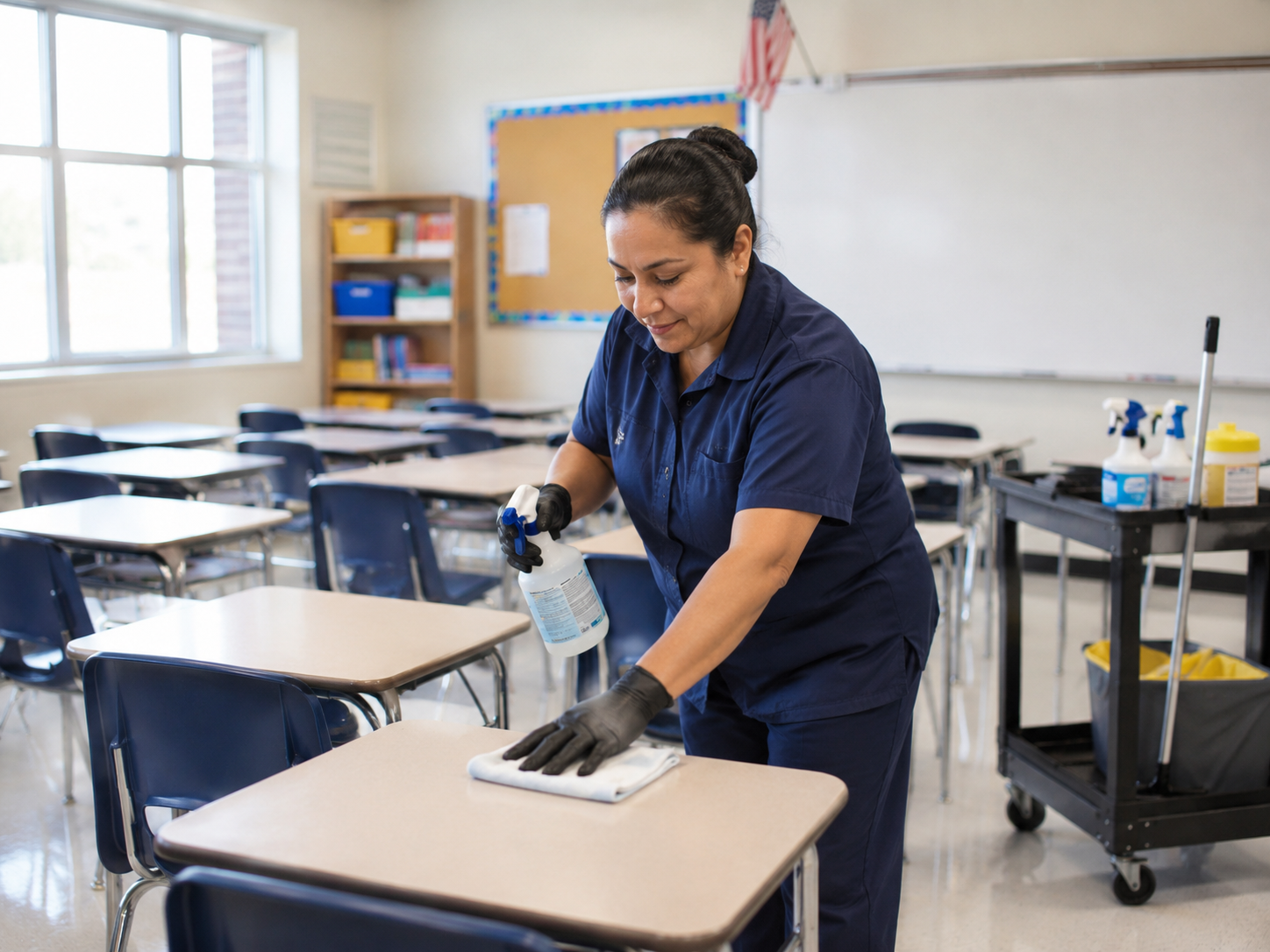
Every classroom should be reset to a clean slate before students arrive. That means more than just dusting and wiping down surfaces.
Remove all furniture and equipment from the room when possible. Clean and disinfect every desk, chair, table, and storage surface. Wipe down all windows, blinds, and window sills. Clean all light fixtures, vents, and tops of cabinets where dust accumulates. Vacuum or dust mop the floor thoroughly. Strip and refinish or scrub and recoat the floor as needed. Clean and disinfect door handles, light switches, and other high-touch points. Restock supplies, including hand sanitizer, tissues, and any classroom cleaning kits.
For high-touch surface disinfection, a one-step product that cleans and disinfects in a single application saves significant time across a building. Spartan TnT Foaming Disinfectant is a strong fit for classroom surfaces, with the EPA registration needed for school settings and a foaming format that increases dwell time on vertical surfaces. You can review the product details at https://bannersystemsma.com/product/spartan-tnt-foaming-disinfectant/.
Restrooms
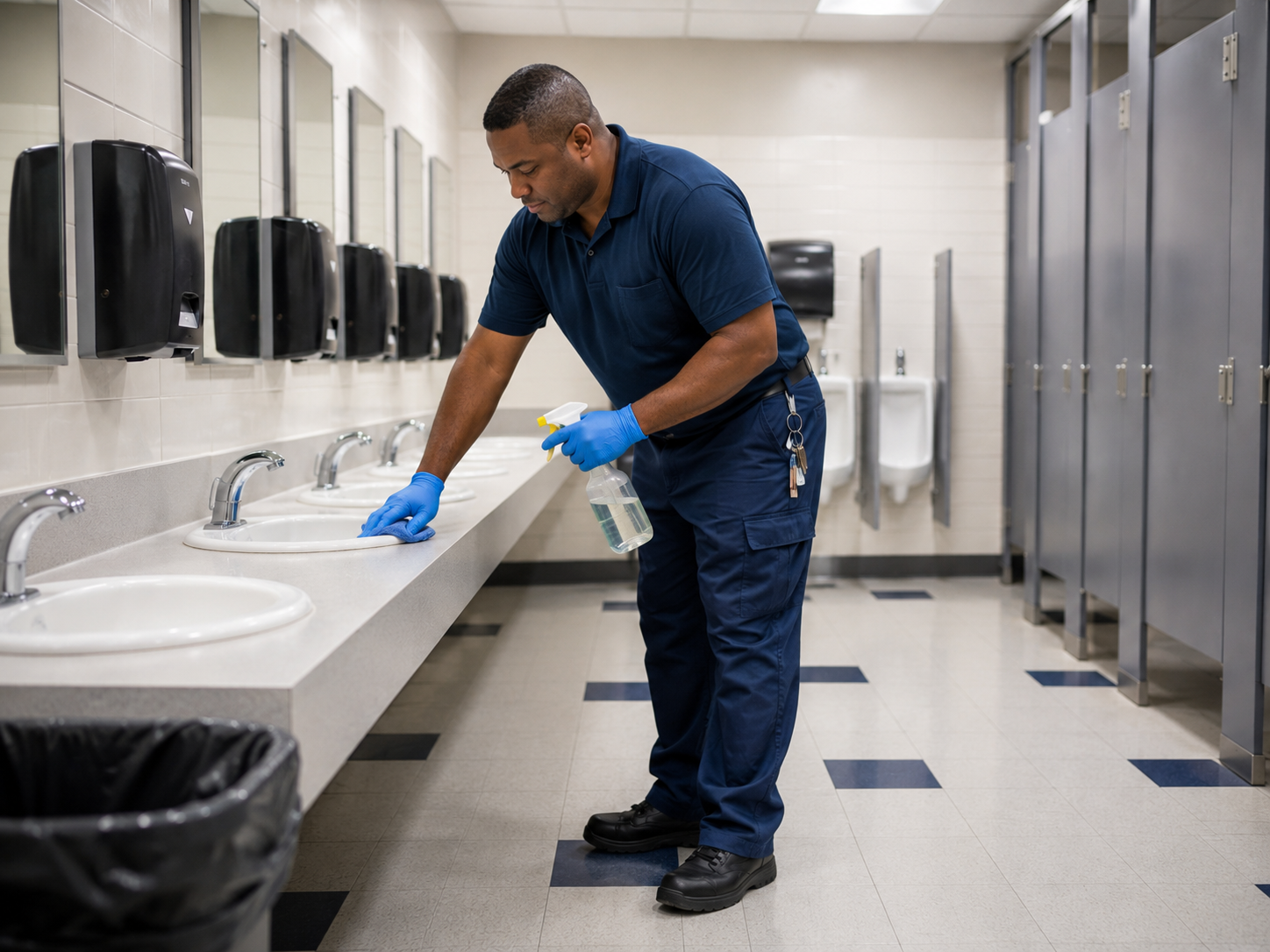
School restrooms are the highest-stress part of the building. Get them right in August, or you will be fighting them all year.
Deep clean and disinfect every fixture, including toilets, urinals, sinks, and partitions. Clean and disinfect floor drains, which are a common source of persistent odor. Strip and refinish the restroom floor or scrub and recoat as appropriate. Clean grout lines and reseal where needed. Inspect and replace or refurbish dispensers for soap, paper towels, and toilet tissue. Restock all consumables to full. Test all touch-free fixtures and replace batteries as needed.
For restroom disinfection and odor control, Spartan NABC Non-Acid Disinfectant Bathroom Cleaner cleans, disinfects, and deodorizes in a single application, with EPA registration covering pathogens of concern in school environments. Product details are available at https://bannersystemsma.com/product/spartan-nabc-non-acid-disinfectant-bathroom-cleaner/.
Cafeterias and food service areas
Food service spaces require both cleaning and food-safe disinfection. Deep clean all preparation surfaces, including the back of the line and equipment exteriors. Clean and sanitize tables, chairs, and benches in dining areas. Strip and refinish or scrub and recoat the cafeteria floor. Clean and degrease ventilation hoods and surrounding wall surfaces. Inspect and clean all dish machines, including chemical lines and spray arms. Restock all chemicals for warewashing, sanitizing, and surface cleaning.
Hallways and common areas
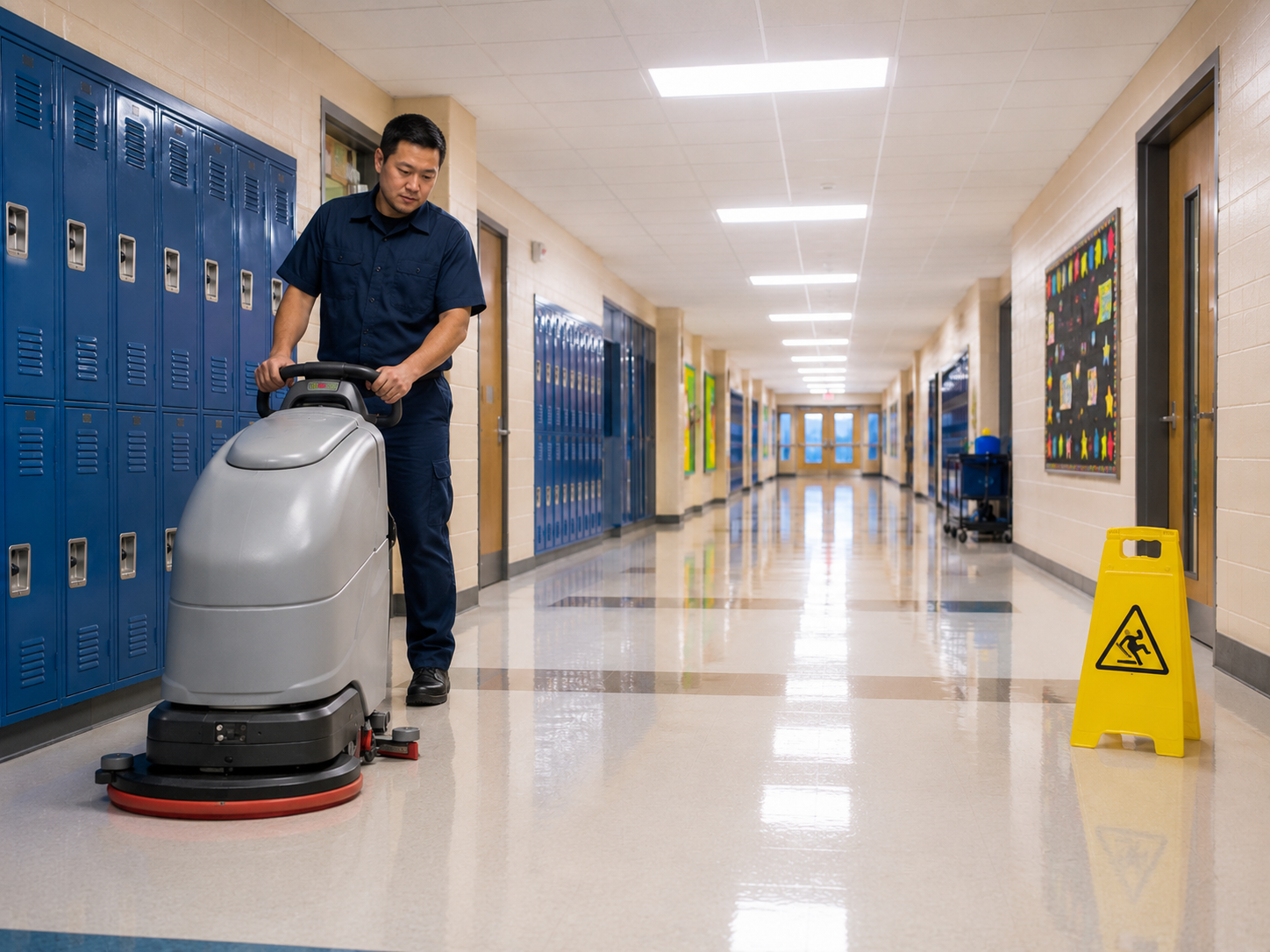
Hallway floors take the most traffic and are the most visible surface in the building. Strip and refinish all hard floors, with multiple coats of finish for the year ahead. Deep clean and extract all carpeted areas. Wipe down lockers, walls, and stairwells. Clean and disinfect drinking fountains. Replace or repair walk-off mats at every entrance. Restock hand sanitizer at all building entry points.
Gymnasiums and athletic facilities
Strip, refinish, and recoat gym floors as needed for the season. Deep clean locker rooms, shower areas, and equipment storage. Disinfect all athletic equipment and mats. Inspect and clean ventilation systems in locker rooms and weight rooms.
Offices and administrative areas
Clean and disinfect all desks, phones, keyboards, and shared equipment. Vacuum and spot clean all office carpeting. Restock supplies in conference rooms and copy areas. Wipe down all door handles and high-touch surfaces.
Outside the building
Power wash entry walkways and main entry doors. Inspect and replace exterior trash receptacles and liners. Clean exterior windows at student-accessible heights. Walk the entire perimeter for trash, debris, and any maintenance items that need attention.
What facility teams commonly miss
Floor drains. They are out of sight and out of mind, and they are one of the most common sources of school-year odor complaints. Treat every floor drain in restrooms, locker rooms, and food service areas before students return.
HVAC and vents. Air return vents, supply vents, and ceiling diffusers accumulate dust over the summer. They are visible to anyone who looks up, and they affect indoor air quality from the first day.
The tops of things. Bookshelves, lockers, cabinets, and the tops of door frames collect dust that is invisible at a normal sightline but obvious in afternoon sunlight. A complete cleaning addresses these surfaces.
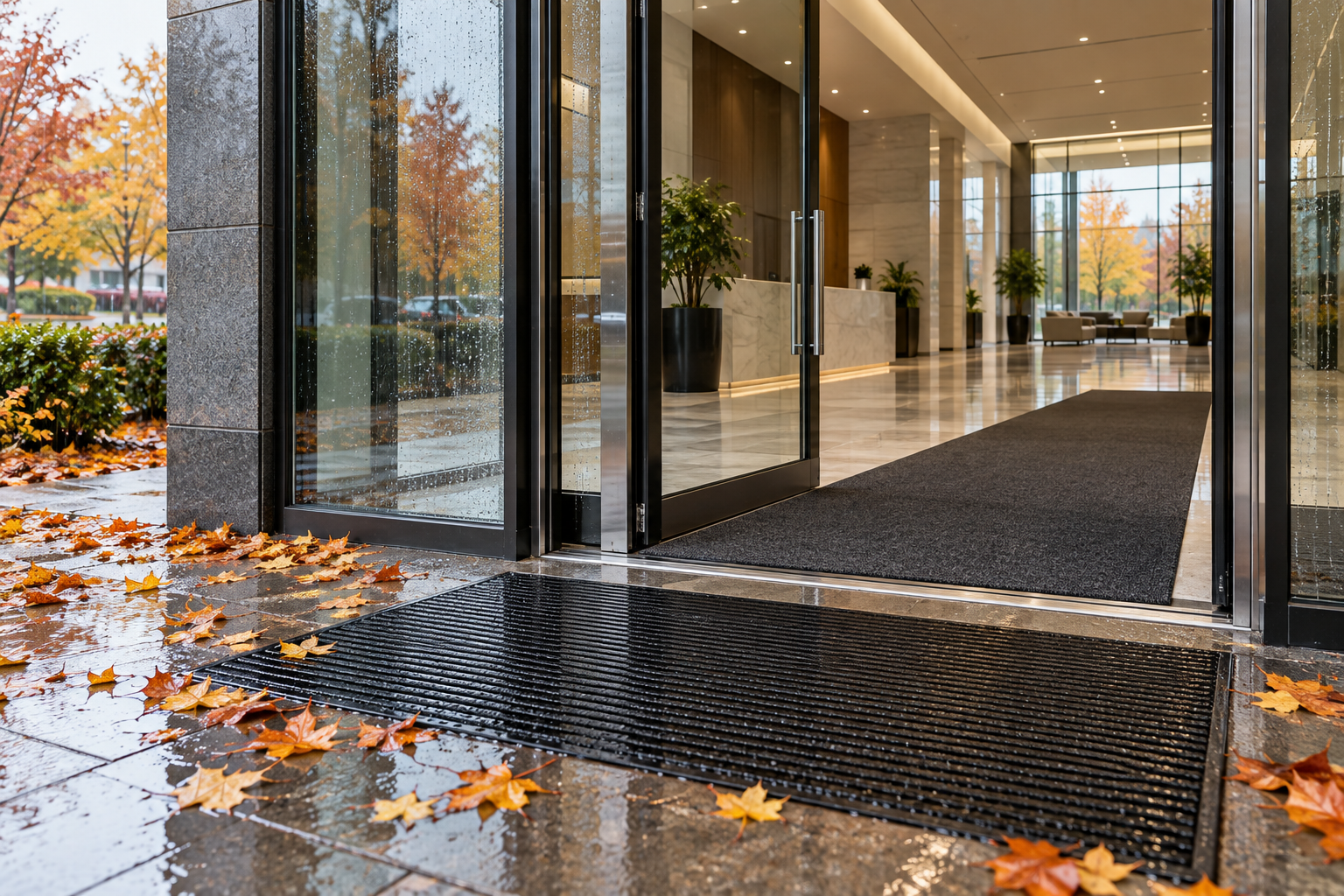
Walk-off mats. Worn mats at building entrances do not capture soil effectively, which means more soil tracks into the building and onto the floors you just refinished. Replace them in August.
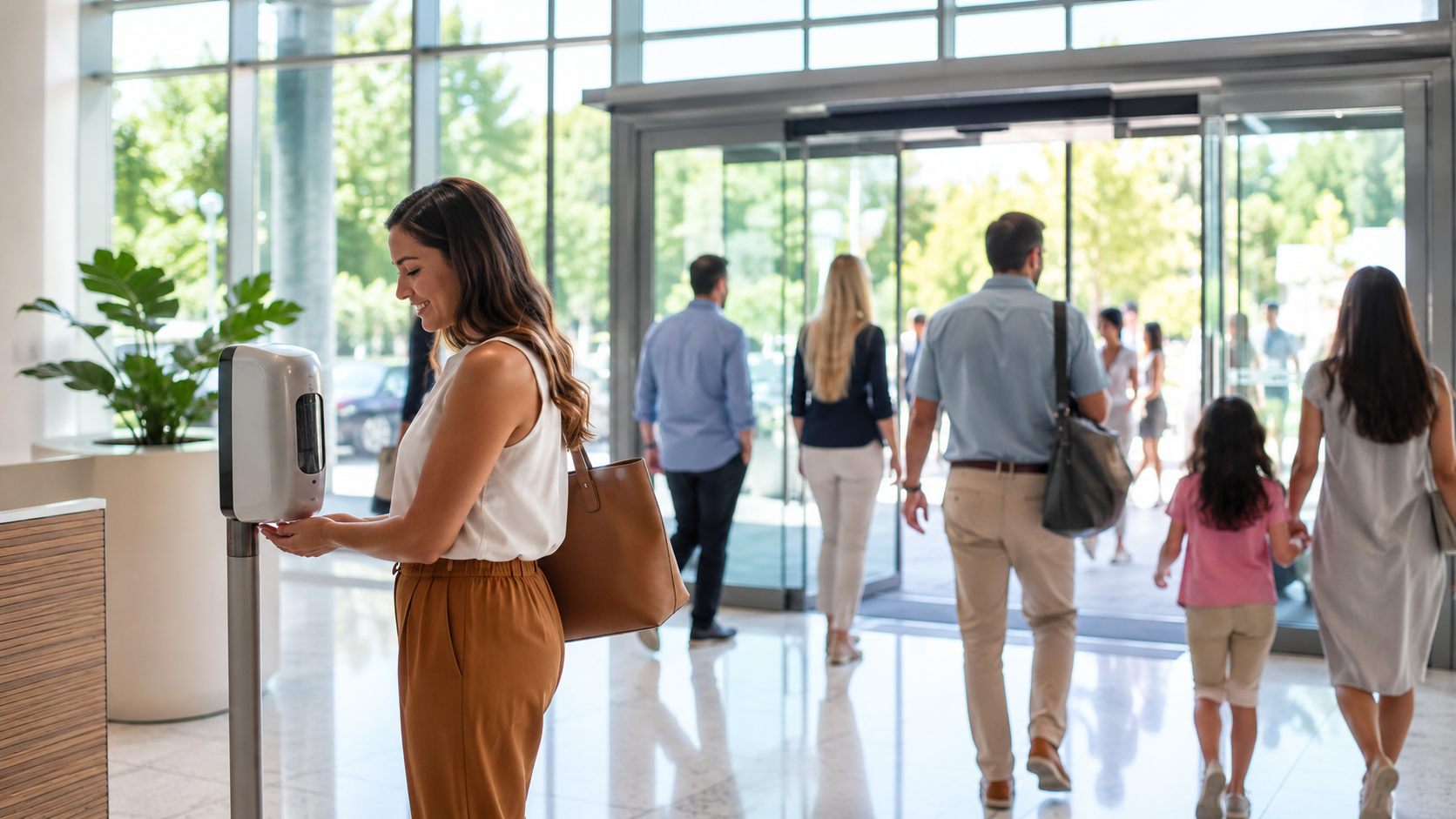
Soap and sanitizer inventory. A school’s hand hygiene program runs on consumables. Going into the first week with dispensers that are full and refill cartridges that are stocked saves the team significant headaches in the early days when everyone is still finding their rhythm.
Frequently asked questions
How long does back-to-school cleaning typically take? A full back-to-school clean for an average K-12 building takes two to four weeks of focused work, depending on the facility’s size and the scope of floor refinishing. Most schools start scheduling the deeper work in late June and target completion by mid-August at the latest.
What disinfectant should be used in classrooms? For classroom high-touch surfaces, look for an EPA-registered disinfectant that is appropriate for use around children, with reasonable dwell times and formulations that do not require rinsing on most surfaces. One-step cleaners that disinfect and clean in the same application are the most efficient choice for production cleaning.
Should classroom floors be stripped and refinished every summer? Most school floors should be stripped and refinished annually, particularly in high-traffic areas like main corridors, cafeterias, and entry points. Lower-traffic areas, such as classroom interiors, can sometimes go two years between full strip cycles if the maintenance program is consistent.
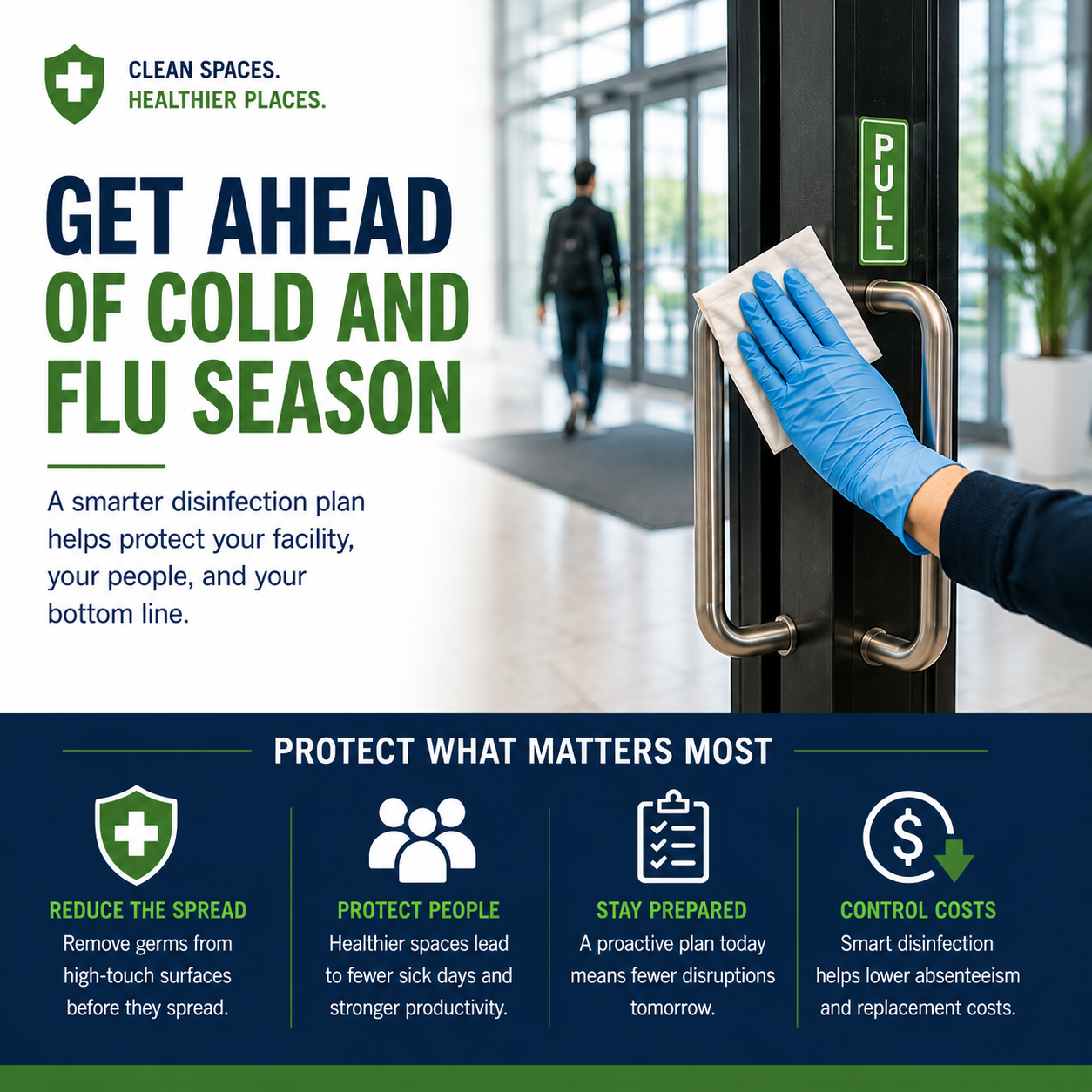
How do we prepare for cold and flu season at the start of the school year? A strong hand hygiene program is the most effective preparation. Stock soap and sanitizer dispensers, make sure tissues are available in every classroom, and confirm that your daily disinfection routine is in place from day one. Many schools also pre-position additional supplies during August so the building is ready to ramp up cleaning frequency at the first signs of seasonal illness.
What is the most important thing to get right before the first day? Restrooms. They are the most-used and most-complained-about part of any school building. If restrooms look great, smell great, and are fully stocked on the first day, the rest of the building will feel ready by extension.
Plan your back-to-school program with Banner Systems
The back-to-school window leaves no room for guessing. The right products, in the right quantities, on the right schedule, are what make the difference between a calm August and a frantic one.
Banner Systems has been working with K-12 districts and higher education facilities across Massachusetts, Rhode Island, and New Hampshire for over 60 years. Our team understands the seasonal demands on school facilities and can help you develop a back-to-school plan that covers every space in the building, from classrooms to cafeterias to athletic facilities.
Contact our team to plan your back-to-school cleaning program, or visit bannersystemsma.com to explore our full catalog of cleaning chemicals, paper products, and janitorial supplies built for educational facilities.